Wednesday, May 22, 2013

New Mexico: Uranium


Grants Uranium Mine Museum, Grants, New Mexico

In Grants, New Mexico, is a fine little museum about the history of uranium mining in New Mexico. Sadly, the museum doesn't share the full story of uranium mines in New Mexico, and I think it should. (It does have a little section on the benefits of coal, sponsored by a coal interest.

The uranium mining enterprises left a wretched legacy of human and environmental damage, still felt today. From my earlier post on this subject:

The New York Times did a story in March 2012 on abandoned uranium mines in New Mexico, Arizona, and Utah: Uranium Mines Dots Navajo Land, Neglected and Still Perilous. Companies that abandoned mines include Chevron and General Electric, among others. I saw no mention in the museum, either, of the Radiation Exposure Compensation Act, which provides some monetary compensation to individuals exposed to radiation due to atomic testing and uranium mining.   


Grants Uranium Mine Museum, Grants, New Mexico

So.

At the Gathering of Nations 2013, there was an area for nonprofit organizations to share their info. The goal of one was to share the informaton about the Radiation Exposure Compensation Act and how folks can get tested at no cost to see if they have radiation exposure.

Renewed interest in uranium mining

Yesterday, I saw this: Nation's Biggest Uranium Mine Planned in New Mexico, published in Grist.

Another site has a page on uranium mining in New Mexico. It has a link to an economic report that came to different conclusions than the author of the Grist article: Perhaps the Grist author simply assumed New Mexico would reap significant economic benefits from a uranium mining renaissance, but the economics professor who wrote his 2008 analysis, concluded that " ... taxpayers will potentially lose value due to the environmental impact of mining."


Will the future be different than the past? 


A recent news release from a company that has uranium and gold interests in the Southwest: 
Wolfpack's mandate is to advance low cost [emphasis mine] heap leach and high grade underground gold projects towards production in the western United States while maintaining an important asset base in uranium.  The Company owns a significant portfolio of gold properties located in Nevada and surrounding states and has options to acquire certain properties, including the Castle Black Rock and Adelaide Properties located in Nevada.  .....

The Company is committed to maximizing shareholder value [emphasis mine] and is well positioned with cash and marketable securities of approximately $8.2 million and a low annual expenditure rate.  In addition, the Company owns 115,000+ acres (46,400 ha) of private mineral rights, with an indicated resource of 26.6 MM pounds U3O8 at an average grade of 0.105% e U3O8 and an inferred resource of 6.1 MM pounds U3O8 at an average grand of 0.110 e U3O8 (Beahm, 2012).  The mining properties are located in New Mexico's Crownpoint Uranium District, a portion of which are under NRC license, and benefit from an increasingly progressive New Mexico regulatory and political environment.[emphasis added]

Credit: Stroh su Gold

 Wolfpack. Low cost production. Maximize shareholder value. ... How confident do I feel in such a company's "commitment" or "mandate" to ensure a safe work environment and responsible environmental husbandry during and following mining?

Look, I get that business is about maximizing profit while minimizing costs. No problems there. But when you're talking about an industry fraught with human and environmental tragedy - you don't even offer a token gesture about social responsibility? 

Executive board members of Wolfpack were principals in Gold Predator Corp. and Silver Predator Corp.

Seriously. Wolfpack? Predator? What's the code name for New Mexico - Little Red Riding Hood?


(For the record: Both Wolfpack and Predator might be positive role models for corporate citizenship. I have no concrete information that points for or against.)     


So what's my point?

Given the dismal consequences of past uranium mining operations, what are the tangible assurances in place to prevent new problems?


Executive summary of a 2012 GAO report

Entire report accessible here.

(I added the underlining.)

The Bureau of Land Management (BLM), the Forest Service, and the Department of Energy (DOE) are the key agencies that oversee uranium exploration and extraction on federal land, but GAO identified three areas where their oversight processes differ. First, these agencies have different processes for notification of uranium exploration or extraction activities on federal land. Second, the agencies require operators to have in place financial assurances to cover the full estimated cost of reclaiming a uranium operation, but they differ in who estimates the value of the financial assurance and the frequency of their reviews of the assurances. Third, under existing authorities, DOE can collect royalties or rents for uranium extraction, but BLM and the Forest Service cannot. DOE has collected about $64 million in rents and royalties from its leasing program since the 1940s.

As of January 2012, a total of 221 uranium operations were on federally managed land, but only 7 were actively extracting uranium and all of these were on BLM land. An additional 29 uranium operations were awaiting federal approval. Of the 202 operations on BLM land, the majority were engaged in either reclamation or exploration activities, according to BLM field officials. In addition, 3 uranium operations were on Forest Service land, and 16 operations were on lease tracts that DOE manages, none of which were actively extracting uranium.

As of January 2012, BLM, the Forest Service, and DOE reported having $249.1 million in financial assurances, and these assurances were generally adequate to cover the estimated reclamation costs for uranium operations on federal land. Nearly all of these assurances ($247.6 million) were for authorized uranium operations on BLM-managed land, with the remaining $1.5 million for authorized operations on Forest Service land and for DOE’s lease tracts. BLM and the Nuclear Regulatory Commission (NRC), which is responsible for overseeing some aspects of uranium operations on federal land, do not coordinate efforts to establish and review financial assurances for in situ recovery operations, which use a series of wells to extract uranium. Such operations account for a large percentage of the total financial assurances held by the agencies.

Federal agencies do not have reliable data on the number and location of abandoned uranium mine sites on federal land or a definitive cost for their cleanup. There are likely thousands of abandoned uranium mine sites on federal land, but GAO identified significant limitations in agencies’ data that make their databases generally unreliable. For example, these databases do not have complete data and do not use a consistent definition of an abandoned mine site. Agencies do not know how many sites will need cleanup, and they do not have information on the total cost to clean up these sites. Based on agencies’ experiences with cleanup at some sites, cleanup costs could vary significantly from thousands to hundreds of millions of dollars, depending on site-specific conditions and the amount and type of work required at each site.

Why GAO Did This Study

From 2005 through 2007, uranium prices increased from about $20 a pound to over $140 a pound, leading to renewed interest in uranium mining on federal land. This interest has raised concerns about the potential impacts that more uranium operations could have on the environment. GAO was asked to (1) compare key agencies’ oversight of uranium exploration and extraction operations on federal land, (2) determine the number and status of uranium operations on federal land, (3) identify the coverage and amounts of financial assurances for reclaiming current uranium operations on federal land, and (4) examine what is known about the number and location of abandoned uranium mine sites on federal land and their potential cleanup costs. GAO reviewed agency reports and regulations, surveyed relevant agency field staff on the status of these operations, and examined federal data on uranium operations, financial assurances, and abandoned uranium mine sites.

What GAO Recommends

GAO recommends, among other things, that federal agencies better coordinate their efforts when establishing financial assurances and develop a consistent definition for abandoned mine sites. The Departments of the Interior, Agriculture, and Energy, along with NRC and the Environmental Protection Agency (EPA), concurred with these recommendations. In addition, Interior and EPA provided technical comments, which GAO incorporated as appropriate.


In addition to the GAO recommendations

Maybe the executives of said enterprises must sign documents that make them personally accountable for financial and safety management.  Maybe the companies have got to take out insurance policies to cover mismanagement or mishaps.

History has shown that it's just too easy for companies and principals to disappear after making a mess.

Tuesday, May 21, 2013

Jetty Jacks


I went to the Rio Grande Nature Center State Park in Albuquerque awhile back.

There are jetty jacks there. I like the name. Jetty jacks.


Jetty jacks, Rio Grande Valley State Park, New Mexico


Jetty jacks were big in the 50s and 60s, installed along rivers to:
  1. Prevent floods from deepening a river channel when it scoured the river bed of sedimentation, which over time, resulted in a longer gap between new-normal river levels and the rootline of riverine vegetation, resulting in more difficulty in said vegetation's access to water
  2. Prevent "scouring" of levees or banks, in which flood waters scooped out the bottoms of the banks as they rushed by, resulting in unstable levees or banks
  3. Allow the capture and retention of sediment and flood debris, resulting in the build-up and maintenance of strong banks, resulting in safe environments for trees - bosques - to grow along the river, and preventing the flooding beyond the stronger banks

 Thousands of jetty jacks were installed along the Rio Grande. And, for the most part, they performed as designed. 


Jetty jacks, Rio Grande Valley State Park, New Mexico

But then the dams (e.g. Jemez Canyon, Abiquiu, Galisteo, and Cochiti) were built, which changed the dynamics of river flooding that made the jetty jacks effective. For example, jetty jacks collected fine sediment from river flooding to build and maintain banks, but the dams sharply curtailed the flow of fine sediment.


Jetty jacks, Rio Grande Valley State Park, New Mexico


Over time, the jetty jacks became a hindrance rather than a benefit.


Jetty jacks, Rio Grande Valley State Park, New Mexico

A detailed discussion of the jetty jack history - as of 2002 - here:  Taking Out the Jetty Jacks: Issues of Jetty Jack Removal in Bosque and River Restoration Planning, by Kathy Grassel, 2002.

In the above article, Ms. Grassel refers to the plans to remove the jacks from the river portion managed by the Santa Ana Pueblo.

Here is that story: Bringing Back the Bosque - Santa Ana Pueblo story.  Published in 2001.

Sidebar: Hmm. This article, published in High Country News, was funded by the McCune Foundation. Ahhh, I thought that sounded familiar.


Jetty jacks, Rio Grande Valley State Park, New Mexico

What interests me is now that a decade has passed, how'd the removal work out? Expectations met?

Per this article, published in 2008, it appears there have, indeed, been positive results. An excerpt:
Along one bank, the Pueblo has removed all "jetty jacks," large metal structures that were installed in the 1950s and 1960s to straighten the river. Removing the jetty jacks allowed the Pueblo to recontour sections of the riverbank, which creates a lower floodplain that helps to reduce channel incision. The recontoured sections have experienced natural revegetation. In addition, the Pueblo has created backwater areas and swales that are planted with native vegetation. The backwater areas increase potential habitat for the Rio Grande silvery minnow, which requires slow-moving currents for spawning. Preliminary surveys (2005-2006) for the minnow on the Pueblo have shown an increase from earlier captures (1995-2000).

Like the Rio Grande silvery minnow, the southwestern willow flycatcher has benefited from habitat changes on the Pueblo. Exploratory surveys in 2001 detected only migratory willow flycatchers. During the summer of 2005, the Santa Ana Pueblo started surveying all suitable riparian habitats within its boundaries for willow flycatchers. After three years of baseline standardized surveys, detections of migratory willow flycatchers have significantly increased from original 2001 estimates. More importantly, southwestern willow flycatchers started residing on the Pueblo in 2006. These new resident flycatchers are defending territories within naturally regenerating riparian vegetation at the confluence of the Rio Jemez and the Rio Grande. This confluence supported very little vegetation in 2001 but is now densely vegetated. The Pueblo used this riparian regeneration as an example to grade the riverbank in an adjacent area to increase sediment deposition. This will create the same type of natural regeneration and expand the available riparian area in hopes that more southwestern willow flycatchers will take residence.

As with so many superficially-simple "problems," the decision to remove or leave in place jetty jacks isn't so simple. The "right" decision depends on: 
  • Who you are - what is your interest in the river and the adjoining land
  • Where the jacks are in relation to the river and to upstream dams
  • What problems - if any - particular jacks are causing
  • The return on the investment in the short, medium, and long-term of leaving the jetty jacks in place or removing them


Monday, May 20, 2013

Gathering of Nations 2013, Part 4: Princesses

Although I have few possessions, I still have this card by George Littlefield. I bought it in Arizona in 2001, on my second solo road trip. 


Winner of the Miss Hobbema Indian Princess Pageant, by George Littlefield


I saw many princesses at the Gathering of Nations.

Princesses, Gathering of Nations 2013, New Mexico.


Princesses, Gathering of Nations 2013, New Mexico.


Princesses, Gathering of Nations 2013, New Mexico.


Princesses, Gathering of Nations 2013, New Mexico.


Princesses, Gathering of Nations 2013, New Mexico.


And the winner of the Miss Indian World pageant was .....


Gathering of Nations, Part 3: Buckskin Grace


Gathering of Nations 2013, New Mexico


During some ladies' buckskin dances, I happened to be sitting on a court-side bleacher. Thus it was I saw how gracefully the buckskin fringe swayed with the womens' steps.

In the dance below, which includes both buckskin and cloth dresses, you can see the beautiful fringe sway of  a buckskin dancer from the back. ... and I love the song.


Below you can see how the fringe moves from the front and side, as you watch the Head Woman Dancer lead her family, friends, and village supporters on a march around the court. Another lovely song.


Below is a video from a 2007 event, highlighting three buckskin dancers. Dignity and grace are two of the hallmarks of buckskin dancing.


I enjoyed reading these discussion about making a buckskin dress:

In this thread, ladies talk about traditional and contemporary colors of buckskin dresses - that eons-old tension between old ways and new in all cultures.  

In a discussion thread about how to make a buckskin dress, this dressmaker packs so much information in her response - family history, traditions, technique, blending of the spiritual with the making, and a generous offer to mentor the original poster:  

Gathering of Nations 2013, New Mexico
Hi! I make Buckskin Dresses for a living and work on them everyday!

I agree with Friend of Bear that the best way to learn to make one is too look at a good dress and see how it was put together. I took my Mother's dress and studied every part of it (without taking it apart...it would have meant death!!).

Ask someone's hands-on help because there is a lot of feeling the hides and looking at the hides which will tell you which hide is good for which piece...top, skirt, fringe.
One thing that we never, ever, never do...is use glue on any part of a Buckskin Dress!!!! And we do not use a hole punch either!

There is no need for glue if you are going to tie a skirt and you use an awl for all holes. I hand sew my dresses unless specifically asked to be tied at the sides. If you sew the seam, you cut the side fringe separately and sew it into the seam inside out, of course, the the hides back to back...smooth side in. Work with it...you will find the right way.

The most important thing is to use good tools. That would be my best advise. A very good, very sharp pair of leather scissors. Good buckskin needles, awls, a small pair of gripping pliers (don't know the real name) to help you pull the needle through 3 layers of buckskin when it is stubborn. Sometimes just a firm grip is all you need. Good strong thread or sinew.

I cut all my strings straight, not in a circle.. and I harldly ever stretch my commercial hides. If you cut the dress right and fit it right...they will never be stretched on the body! The current Comanche Nation Princess is wearing a dress I made for her when she was 13 and she is now 19 and she always sits properly, so that the back of the skirt has never "pooched".

The only part of the dress that does get stretched are the fringes when I am cutting them. This is good to do so that gravity does not pull the fringes too long as they wear the dress so they become uneven and have to be trimmed all the time.

Making a Buckskin Dress is a constant learning experience. I find new and better ways of doing some part of it on each new dress I make. I also listen to comments and ideas from other Dress makers and from wearers and I am always open creative thinking. And of course the elders. Even though the dress has evolved so much from the old days...there are always reasons for a dress being made a certain way and by listening to them you can learn so much, or realize why you are doing something...or, what makes me feel good, is when they validate something you are already doing, by saying they do it the same way.

Make your own patterns..start with your own shape (especially if the dress is for you, duh!!) and take your measurements and transfer them to paper. Then go through the hides that you have to find the right one for the right piece and cut it from your pattern. I am not a professional seamstress, I've never made anything from a Simplicty pattern, and I don't know how to use a sewing machine, but I figured this out and you can do it too!

I am so sorry to go on and on...I just wanted you to have the basics...it takes me two weeks to put a dress together...choosing the hides to making the pattern and cutting and sewing and that is with my life and cooking and talking to customers and going to Pow-Wows in between (notice I left out cleaning house), and if I am diligently using every other spare moment on the dress.

It has taken me 10 years to get to be asked to make dresses for some of he best Championship winning dancers in the country and I have a waiting list one year long, but I would be glad to share any info that I can in writing.

If you are ever in SW Oklahoma, drop in on me and we'll do it together!

You know, I forgot the most important thing!!! I pray before I ever cut a hide in thankfulness for the deer (or elk) that the Creator gave us (I learned that from a 90 year old dress maker Alice Littleman) and I thank God everyday for the talent and vision and the strength and the health that he allows me to have that I need to make dresses. All Glory goes to God!!!
Ah-ho!!


Saturday, May 18, 2013

Gathering of Nations 2013, Part 2: A Whole 'Nother Music Genre


Gathering of Nations 2013, New Mexico


From my experience at the Red Paint Powwow, I knew about the (big) drum contests, but I didn't know anything about the hand drums.

It opened up an entirely new genre of  music to me. Totally unexpected experience.

Sometimes one, sometimes two, sometimes a group of people standing in front of the mic, holding hand drums. First they'd sing in a Native language, then there'd be a pause, and then the song would be in English. Romantic at times. Poignant. Funny.

They're "round dance"songs. 


A sampling of songs 

Ask Your Mom For Fifty Cents 


Ask your mom for fifty cents
To watch the fat man jump the fence
He jumped so high he touched the sky
He never came down til Fourth of July. 


Just for You


I don't know what to do 
I can't just say I love you
After all we've been through
What am I supposed to do
I've always been meant just for you.


What a voice.


Sonny Boy


Sonny boy, Daddy's proud of you
In every thing you do
Daddy's here for you
Sonny boy, Daddy cares for you
Daddy loves you, too
You are Daddy's pride and joy


What is a round dance song? 

I found this remembrance on a youtube video of a round dance song, Honey Open the Door:

Imagine this, when I was a kid in the 50;s, rounddances were held in people's houses,teams of horses and sleighs would arrive with singers and dancers. Us kids would play outside till we had enough, the house would be rocking, the room blue with smoke. There'd be deer meat soup and boiled potatoes and of course bannock and lard, berries and canned milk. Granny would make us a bed somewhere and we'd watch and listen till we fell asleep.


Chickamauga Cherokee gives a bit of explanation about round dance music, with an excerpt below: 
The origins of Round Dance come from the healing dances of the Plains Indians – it retains its spiritual core and inspires joy and happiness – men and women, young and old dance in a spectacular display of kinship and harmony.  It has developed into a friendship dance that has long been held as a courting activity. This dance is one of the few Native American dances in which women get to dance with men. Native American traditional dances are usually segregated by gender.  It is performed during a portion of a powwow and during many social occasions. The round dance has an infectious upbeat tempo and creates a simple and fun activity. The beat of the drum is different from other dances.


A Saskatchewan library hosted a round dance in 2011, and noted this:

Protocol
First Nation protocol and information for the pipe ceremony and feast [which would precede the round dance]: Women who are on their monthly cycle must refrain from attending.  [Emphasis added.] Women are encouraged to wear a long skirt to all traditional gatherings.

The text above that I highlighted in pink is a good example of what I was talking about back here - the restrictions on women's self-determination in the guise of culture, religion, "respect," or "protection." The fact that a public library in Canada prohibited some of its members from attending a public event, based on their gender, is repellent.

But I digress.

I love the round dance songs and plan to listen to many more of them. 

Friday, May 17, 2013

Gathering of Nations 2013, Part 1

Gathering of Nations 2013, Albuquerque, New Mexico


Several folks have remarked to me that they like small powwows more than large ones. The Gathering of Nations is certainly in the large category, billed as the largest powwow in North America.

Now having done both small and large, I'll agree with those who prefer the smaller events. On the other hand, an event as large as the Gathering of Nations brings perspectives you might not see at small powwows.

A mishmash of impressions below.


Gathering of Nations 2013, Albuquerque, New Mexico


The Red Paint Powwow (January) in Silver City was my first powwow

This is where I learned about the components of some powwows. I went into considerable detail back then, and if you're interested, you can read about them in the links below, as I won't repeat them in the Gathering of Nations post.

Part 1: Golden Eagle
Part 2:  The Chinese Hopi
Part 3: The Gourd Dance
Part 4: The Grand Entry
Part 5: Gaan Dancers
Part 6: North and South and drum and Drum
  

The Gathering of Nations - in size - exceeded the Red Paint Powwow by a factor of, I don't know, a hundred. It's big.


Gathering of Nations 2013, Albuquerque, New Mexico


Sound

The sound is excellent everywhere in the arena.

Bring earplugs - you never know where you might end up, and it might be right next to a monster speaker.


Gathering of Nations 2013, Albuquerque, New Mexico

Photos

Getting good photos is a challenge because you're either too far away or, if you're close to the performance floor, there are likely people standing in your line of sight.

Also, most people you want to photograph are moving - dancing, drumming, walking, jumping - and transferring in and out of your frame. While movement can result in beautiful photographs, it means you'll need to take lots of shots to guarantee a successful few.

One option is to forego the camera and live in the moment.


Gathering of Nations 2013, Albuquerque, New Mexico


Sun

Holy mother, there is no shade in the outside area with the food vendors and the music stages.

If you'll be at the GON during the day, bring both a hat and sunglasses. The sun is brutal.

Note: You don't have to go outside if you don't want. There are also food vendors and artisan items indoors.  


Gathering of Nations 2013, Albuquerque, New Mexico


The emcee(s)

I attended the Gathering of Nations on Saturday, and it seemed there were two emcees, trading off. I couldn't help but compare the emcees at the GON with the emcee at Red Paint. All had liquid radio voices, pleasant to listen to. .

All expressed humor. Red Paint Powwow's emcee, Otis Half Moon, had a wry wit that touched on history, sociology, politics, even poverty.

I felt a couple of comments by one of the GON emcees were inappropriate, with references such as "give me some tongue" and "chasing tail."

Given the troubling reports of an appallingly high rate of sexual assault against Native girls and women by Native men - such comments felt, at best, tasteless, especially at a family event such as GON.

And especially with the Native American Women Warriors, aka "lady warriors," serving as this year's Color Guard (and given the U.S. military's disgusting tolerance of sexual assault of women soldiers by their male comrades and commanding officers.)


"Lady warriors"of the Color Guard, Gathering of Nations 2013, New Mexico.


A giving tradition

At GON, after the New Zealand Maori dance troupe finished, the blanket was laid out for donations to help them defray its travel costs. Perhaps on different days of GON or at different times, other groups benefit from blanket collections.

Gathering of Nations 2013, Albuquerque, New Mexico

I always smile when I think how Red Paint's emcee encouraged donations during a blanket collection, noting that even government cheese was welcome. (There was a time when I had to get me some of that government cheese.)


Next --> Part 2: A Whole New Music Genre

Thursday, May 16, 2013

Portability: World Clock Revisited

In December 2012, I recounted my search for a useful world-time application.

I'd found a pretty good app, but I continued to search for better than pretty good.

Well, I succeeded.

World Time Buddy is my new default app for comparing time zones. I don't have to log in, it's free, and I can flip between 24-hour and 12-hour easily. With the free level, I can have up to four zones visible simultaneously, and the default shows my own time zone among the four.


World Time Buddy home page


Also, when I go to World Time Buddy, the home page is the zone-comparison page.

With Time and Date (see below), you have to drill down from the home page to get what you need.

Time and Date home page


World Time Buddy is visually cleaner and "quieter" than Time and Date. I don't like a lot of visual clutter on websites. 


World Time Buddy is one of my new best portable friends.

Sunday, May 12, 2013

San Francis de Paula Fiesta, Tularosa, New Mexico


Queen, knights, and bishop. San Francis de Paula Fiesta, Tularosa, NM.


Here's the story:

The Latino settlers of Tularosa and the Apache in nearby Mescalero land had skirmished for years. It came to a head in 1868, on Round Hill, when the Tularosans and a contingent of U.S. soldiers engaged in a brief battle with the Apache. The Tularosans prayed that if they won the battle, they'd build a church in St. Francis' honor and commemorate him every year in thanks for his intercession. 

San Francis de Paula Fiesta, Tularosa, NM.


The Tularosans did win the battle with the Apache and they did build the church, and thus has been celebrated every year the San Francis de Paula Fiesta. And also, the Apache and the Tularosa settlers pretty much got along fine ever after.

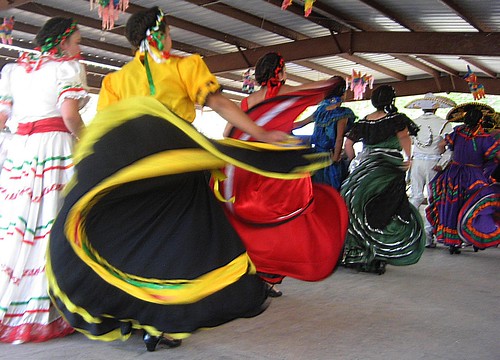
Like so many rituals in New Mexico, the layers of culture are many and rich, as demonstrated in the fiesta's music, dance, clothing, language, food, and rites.


In this one small fiesta in this one small town, were present:
  • Bishop
  • Queen and her court
  • Knights (of Columbus)O
  • Priest from Peru
  • Bilingual Mass in a church that honors North American and European saints
  • Indian-Mexican-American religious dance traditions through the matachines and danzantes
  • Mexican-American folklorico dance tradition
  • La Marinera, a Peruvian dance with indigenous Peruvian, African, and Spanish roots
  • Belly dancing
  • Hip hop dancing
  • Line dancing
  • Navajo tacos, hamburgers, enchiladas

Tepeyac Danzante from Hatch. San Francis de Paula Fiesta, Tularosa, NM.


In my opinion, a sustainable culture is one that keeps the traditional arts alive while continuing to create new expressions of its culture, based on contemporary realities of life. Which is one reason why I appreciated so much the variety of local talent showcased in Sunday afternoon's entertainment.

Note: The danzante and matachine dancers at the fiesta represented a recent revolution: women among the ranks. Both of these religious-dance practices, in the past - and still almost exclusively today - men only.


Folklorico dancers from Hondo. San Francis de Paula Fiesta, Tularosa, NM.

St. Francis observed all of it:

St. Francis observes. San Francis de Paula Fiesta, Tularosa, NM.


 One of my favorite moments - the new church priest, from Peru, dancing the La Marinera:


I also loved how many of the fiesta attendees joined one of the line dances. Notice the fiesta queen in white capris and peach top. One of the fiesta organizers, in black shorts and white/black t-shirt, used her force of personality to get people to join in - wonderful! I saw her give a particular someone a look that would be understood in any language: By God, you'd better get your ass out here and dance or I'm going to kick it into next week when this is over.


A great fiesta!

A slideshow:


San Francisco de Paula Fiesta, Tularosa, NM

 #30


Saturday, May 11, 2013

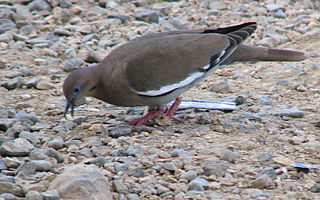
Silence of the Doves

Yesterday morning I noticed what I wasn't hearing.

I wasn't hearing the constant song of the white-winged dove, a sound I'm accustomed to hearing every day, all day in Alamogordo. 

I know I saw one of the doves yesterday, but no song. 

Where are they?

White-winged dove. Credit: wikicommons

Friday, May 10, 2013

Rootless Lit: Eighty Days


I was put on to this book by Maria Popova of Brain Pickings, via her post, How To Pack Like Nellie Bly, Pioneering Journalist.


The book is Eighty Days: Nellie Bly and Elizabeth Bisland's History-Making Race Around the World.

Credit: Barnes and Noble


The book is an account of two American women's race in 1889, to "girdle the earth" - one going east and the other west - with three objectives: 1) travel around the world in less than the "80 days" in Jules Verne's famous book about a man's round-the-world adventure; 2) do it faster than the other woman; and 3) sell newspapers for the World and Cosmopolitan.

In addition to the plot of the journey, Matthew Goodman puts the story in the context of the day, touching on topics such as: 
  • discrimination against women
  • racism
  • ethnocentrism
  • how the American railroad affected culture and enterprise
  • "stunt" journalism
  • working and living conditions of laborers in the U.S. and elsewhere

In re: discrimination, racism, and working/living conditions it is, at turns, inspiring and disheartening to compare the past with the present. 

Technologically, it's nothing short of amazing to consider how far the world has progressed in transportation, medicine, and communication in the span of 125 years. 


On women

I read Eighty Days just after re-reading Isaac Asimov's Foundation series. I don't remember the point at which I realized Mr. Asimov made virtually no reference to women, but it slowly came to me that in his future universe - notwithstanding all of the scientific advances over the thousands of years into the future he wrote about - it was a universe in which, with rare exception, only men figured in current events. And even in the unusual case where a girl or woman played an important role, Mr. Asimov assigned her with the usual, circumscribed boundaries for women: the use of her beauty or feminine charms to achieve her aims. Why couldn't an intelligent author like Mr. Asimov factor in the possibility that thousands of years hence, women might join the mainstream of history?

It was in this frustrated frame of mind that I read Eighty Days, not to be surprised by the many discriminations against women during the 1880s the author shares, but to consider how, in so many parts of the world today (including the U.S.) women are still denied self-determination. Said abilities to make one's own choices about getting married, getting divorced, becoming pregnant, giving birth, getting an education, how to dress, where one can walk, if one can drive, to whom one can speak, places one can enter, where to work, how to create, all restricted under the guise of religion, protection, "respect for women," or culture - thereby rationalizing the bars on the windows.


On time

Until I read Eighty Days, I had no idea that it was the railroad companies that established a standardized time in the U.S. Fascinating.


The originals

One of the disappointments I had in Eighty Days was the dearth of direct quotes from Nellie Bly and Elizabeth Bisland's books. You can find the originals here:  
  • Nellie Bly: Around the World in Seventy-Two Days - audio - here or here.
  • Nellie Bly: Around the World in Seventy-Two Days - online text - here
  • Elizabeth Bisland: In Seven Stages: A Flying Trip Around the World - online text - here
  • Elizabeth Bisland: In Seven Stages: A Flying Trip Around the World - downloadable to ebook
  
Of the two women, it seems that Ms. Bisland was more gracious and more positive in perspective than Ms. Bly, even though the latter was the far greater celebrity of the time. For example, where Ms. Bly saw cause for complaint, Ms. Bisland saw beauty and excitement.


For me, Eighty Days served as a reference for comparison between the world as it was only 125 years ago and how it is today, and for that, I appreciate Mr. Goodman's work.

I do still shake my head at Nellie Bly's decision to buy a macaque monkey in the middle of her journey, wondering "what was she thinking"?! And it's one of the loose ends Mr. Goodman leaves for the readers - what eventually happened to the mean creature, forced to go around the world in a small cage?

Thursday, May 9, 2013

Leasburg Dam State Park, New Mexico: Blooming


Do you see the hummingbird? Leasburg Dam State Park, New Mexico


Leasburg Dam State Park and Pancho Villa State Park are somewhat similar in that both are very close to town. Indeed, Pancho Villa is in Columbus, New Mexico. Leasburg Dam, I'd say, is adjacent to Radium Springs. From within Leasburg Dam State Park, you can see people's houses.

Leasburg Dam State Park is also close to Las Cruces, just north of same on Interstate 25. 


But where Pancho Villa has a parking-lot vibe, Leasburg Dam State Park seems peaceful, relaxing, and well-loved.

I say well-loved because somebody or somebodies created trails throughout the park by painstakingly laying rocks along both sides of the paths.


There's a sweet little memorial garden within the park where I ate my packed lunch. There's a botanical garden over by the restrooms, across from the visitor center.


Leasburg Dam State Park, New Mexico


There's a playground that looks pretty new.


Leasburg Dam State Park, New Mexico

There was a lot of blooming happening on this fine May weekend when I visited.

Leasburg Dam State Park, New Mexico


There's also a visitor center, beautifully designed. (Unfortunately, it was closed during my visit, so I don't know what's inside.)

Leasburg Dam State Park, New Mexico


A slide show:


Leasburg Dam State Park 2013


#30

Wednesday, May 8, 2013

Valley of Cow Patties, erm, Fires, New Mexico

Cow Patty Hill, New Mexico. No, really, Valley of Fires, Highway 380, New Mexico.


Yes, I get the fire bit .. lava ... volcano ... hot sulphurous fumes .... but visually, it's all a field of cow patties.

Valley of Fires, Highway 380, New Mexico.


 Here is an actual cow patty. Judge for yourself.

Cow patty. Credit: K.A. Lewis


The boardwalk trail at Valley of Fires Recreation Area is wheelchair accessible. Nice. It's a pleasant walk through the lava field. Although it was hot the day I strolled through, there was a lively breeze, so it was very comfortable.
 
Valley of Fires, Highway 380, New Mexico.

Also, it's spring in the high desert, so there were flowers. Because of the intense sunlight, I boosted the color saturation and contrast so you can see the blooms. I need to do some research on how to take photos in full sunlight.

Valley of Fires, Highway 380, New Mexico.

Valley of Fires, Highway 380, New Mexico.

Valley of Fires, Highway 380, New Mexico.

Valley of Fires, Highway 380, New Mexico.

Valley of Fires, Highway 380, New Mexico.


Valley of Fires, Highway 380, New Mexico.