Showing posts with label grants. Show all posts

Tuesday, July 18, 2023

Bluewater Lake State Park, New Mexico: Vienna Sausages


Walmart Vienna sausages. July 2023. Credit: Mzuriana.:

Yes, processed foods are of Satan. 

Nevertheless, all because of a visit to the village store just outside the Bluewater Lake State Park entrance, where I camped last week, I embarked on a taste comparison of Vienna sausages

  • Great Value
  • Libby's
  • Armour

The store played a role because its shelves included Vienna sausages and other canned meats, including canned roast beef, which I will talk about another day. 

Because the temps, day by day, had been in the 90s, taxing both my ice chest and my limited creativity in finding protein that interested me and didn't require refrigeration, I paused before these baby-food hot dogs. 

I call it baby food because I associate Vienna sausages with highchair fare, vicariously picked up by the chubby fingers of a floor-crawling lil tyke, pushed by a not-so-steady fist into her drooly mouth, which she often shapes into a heart-melting, mostly-toothless grin.


Libby's Vienna sausages. July 2023. Credit: Mzuriana.:


My reviews: 

  • Great Value (Walmart): Silky, reminiscent of my family's culinary heritage of braunschweiger-and-Miracle Whip-on-Roman Meal-bread lunches, a veritable paté. I liked it. 
  • Libby's: Inferior to Great Value - one of those taste experiences so bland, it would be better to have something that tasted bad. 
  • Armour: I ate it, but the memory of the act slid right off my brain pan, it was so forgettable. 


Armour Vienna sausages. July 2023. Credit: Mzuriana.:


Wednesday, May 22, 2013

New Mexico: Uranium


Grants Uranium Mine Museum, Grants, New Mexico

In Grants, New Mexico, is a fine little museum about the history of uranium mining in New Mexico. Sadly, the museum doesn't share the full story of uranium mines in New Mexico, and I think it should. (It does have a little section on the benefits of coal, sponsored by a coal interest.

The uranium mining enterprises left a wretched legacy of human and environmental damage, still felt today. From my earlier post on this subject:

The New York Times did a story in March 2012 on abandoned uranium mines in New Mexico, Arizona, and Utah: Uranium Mines Dots Navajo Land, Neglected and Still Perilous. Companies that abandoned mines include Chevron and General Electric, among others. I saw no mention in the museum, either, of the Radiation Exposure Compensation Act, which provides some monetary compensation to individuals exposed to radiation due to atomic testing and uranium mining.   


Grants Uranium Mine Museum, Grants, New Mexico

So.

At the Gathering of Nations 2013, there was an area for nonprofit organizations to share their info. The goal of one was to share the informaton about the Radiation Exposure Compensation Act and how folks can get tested at no cost to see if they have radiation exposure.

Renewed interest in uranium mining

Yesterday, I saw this: Nation's Biggest Uranium Mine Planned in New Mexico, published in Grist.

Another site has a page on uranium mining in New Mexico. It has a link to an economic report that came to different conclusions than the author of the Grist article: Perhaps the Grist author simply assumed New Mexico would reap significant economic benefits from a uranium mining renaissance, but the economics professor who wrote his 2008 analysis, concluded that " ... taxpayers will potentially lose value due to the environmental impact of mining."


Will the future be different than the past? 


A recent news release from a company that has uranium and gold interests in the Southwest: 
Wolfpack's mandate is to advance low cost [emphasis mine] heap leach and high grade underground gold projects towards production in the western United States while maintaining an important asset base in uranium.  The Company owns a significant portfolio of gold properties located in Nevada and surrounding states and has options to acquire certain properties, including the Castle Black Rock and Adelaide Properties located in Nevada.  .....

The Company is committed to maximizing shareholder value [emphasis mine] and is well positioned with cash and marketable securities of approximately $8.2 million and a low annual expenditure rate.  In addition, the Company owns 115,000+ acres (46,400 ha) of private mineral rights, with an indicated resource of 26.6 MM pounds U3O8 at an average grade of 0.105% e U3O8 and an inferred resource of 6.1 MM pounds U3O8 at an average grand of 0.110 e U3O8 (Beahm, 2012).  The mining properties are located in New Mexico's Crownpoint Uranium District, a portion of which are under NRC license, and benefit from an increasingly progressive New Mexico regulatory and political environment.[emphasis added]

Credit: Stroh su Gold

 Wolfpack. Low cost production. Maximize shareholder value. ... How confident do I feel in such a company's "commitment" or "mandate" to ensure a safe work environment and responsible environmental husbandry during and following mining?

Look, I get that business is about maximizing profit while minimizing costs. No problems there. But when you're talking about an industry fraught with human and environmental tragedy - you don't even offer a token gesture about social responsibility? 

Executive board members of Wolfpack were principals in Gold Predator Corp. and Silver Predator Corp.

Seriously. Wolfpack? Predator? What's the code name for New Mexico - Little Red Riding Hood?


(For the record: Both Wolfpack and Predator might be positive role models for corporate citizenship. I have no concrete information that points for or against.)     


So what's my point?

Given the dismal consequences of past uranium mining operations, what are the tangible assurances in place to prevent new problems?


Executive summary of a 2012 GAO report

Entire report accessible here.

(I added the underlining.)

The Bureau of Land Management (BLM), the Forest Service, and the Department of Energy (DOE) are the key agencies that oversee uranium exploration and extraction on federal land, but GAO identified three areas where their oversight processes differ. First, these agencies have different processes for notification of uranium exploration or extraction activities on federal land. Second, the agencies require operators to have in place financial assurances to cover the full estimated cost of reclaiming a uranium operation, but they differ in who estimates the value of the financial assurance and the frequency of their reviews of the assurances. Third, under existing authorities, DOE can collect royalties or rents for uranium extraction, but BLM and the Forest Service cannot. DOE has collected about $64 million in rents and royalties from its leasing program since the 1940s.

As of January 2012, a total of 221 uranium operations were on federally managed land, but only 7 were actively extracting uranium and all of these were on BLM land. An additional 29 uranium operations were awaiting federal approval. Of the 202 operations on BLM land, the majority were engaged in either reclamation or exploration activities, according to BLM field officials. In addition, 3 uranium operations were on Forest Service land, and 16 operations were on lease tracts that DOE manages, none of which were actively extracting uranium.

As of January 2012, BLM, the Forest Service, and DOE reported having $249.1 million in financial assurances, and these assurances were generally adequate to cover the estimated reclamation costs for uranium operations on federal land. Nearly all of these assurances ($247.6 million) were for authorized uranium operations on BLM-managed land, with the remaining $1.5 million for authorized operations on Forest Service land and for DOE’s lease tracts. BLM and the Nuclear Regulatory Commission (NRC), which is responsible for overseeing some aspects of uranium operations on federal land, do not coordinate efforts to establish and review financial assurances for in situ recovery operations, which use a series of wells to extract uranium. Such operations account for a large percentage of the total financial assurances held by the agencies.

Federal agencies do not have reliable data on the number and location of abandoned uranium mine sites on federal land or a definitive cost for their cleanup. There are likely thousands of abandoned uranium mine sites on federal land, but GAO identified significant limitations in agencies’ data that make their databases generally unreliable. For example, these databases do not have complete data and do not use a consistent definition of an abandoned mine site. Agencies do not know how many sites will need cleanup, and they do not have information on the total cost to clean up these sites. Based on agencies’ experiences with cleanup at some sites, cleanup costs could vary significantly from thousands to hundreds of millions of dollars, depending on site-specific conditions and the amount and type of work required at each site.

Why GAO Did This Study

From 2005 through 2007, uranium prices increased from about $20 a pound to over $140 a pound, leading to renewed interest in uranium mining on federal land. This interest has raised concerns about the potential impacts that more uranium operations could have on the environment. GAO was asked to (1) compare key agencies’ oversight of uranium exploration and extraction operations on federal land, (2) determine the number and status of uranium operations on federal land, (3) identify the coverage and amounts of financial assurances for reclaiming current uranium operations on federal land, and (4) examine what is known about the number and location of abandoned uranium mine sites on federal land and their potential cleanup costs. GAO reviewed agency reports and regulations, surveyed relevant agency field staff on the status of these operations, and examined federal data on uranium operations, financial assurances, and abandoned uranium mine sites.

What GAO Recommends

GAO recommends, among other things, that federal agencies better coordinate their efforts when establishing financial assurances and develop a consistent definition for abandoned mine sites. The Departments of the Interior, Agriculture, and Energy, along with NRC and the Environmental Protection Agency (EPA), concurred with these recommendations. In addition, Interior and EPA provided technical comments, which GAO incorporated as appropriate.


In addition to the GAO recommendations

Maybe the executives of said enterprises must sign documents that make them personally accountable for financial and safety management.  Maybe the companies have got to take out insurance policies to cover mismanagement or mishaps.

History has shown that it's just too easy for companies and principals to disappear after making a mess.

Wednesday, January 2, 2013

Grants, New Mexico: More Than You Think

There are those who'd say that Grants, New Mexico, offers little to justify an overnight - or God forbid - a two-night stay.

I have a different opinion.

Northwestern New Mexico Visitors Center, Grants, New Mexico


The Northwestern New Mexico Visitors Center, just outside of Grants, is a wonder of a visitors center. Operated jointly by the National Park Service, U.S. Forest Service, and the Bureau of Land Management, the center is a beauty in design and the scenic vista you view through the panoramic windows.  The staff are friendly and helpful. There is a treasury of written informational materials, most of them free. The bathrooms sparkle.  You can watch movies. There's a small museum.

Sandstone Bluff, El Malpais, near Grants, New Mexico


El Malpais National Monument is within an hour of Grants, whether you access it via Highway 117 (exit 89 off of I-40 or Highway 53 (exit 81 off of I-40). Within El Malpais are popular destinations Sandstone Bluffs, La Ventana Arch, and Lava Falls. There are good opportunities for hiking and photography.

El Morro National Monument, on Highway 53, showcases the Inscription Trail (wheelchair accessible), which includes about 2000 petroglyphs and carved inscriptions from Spanish (and later) passers-by.

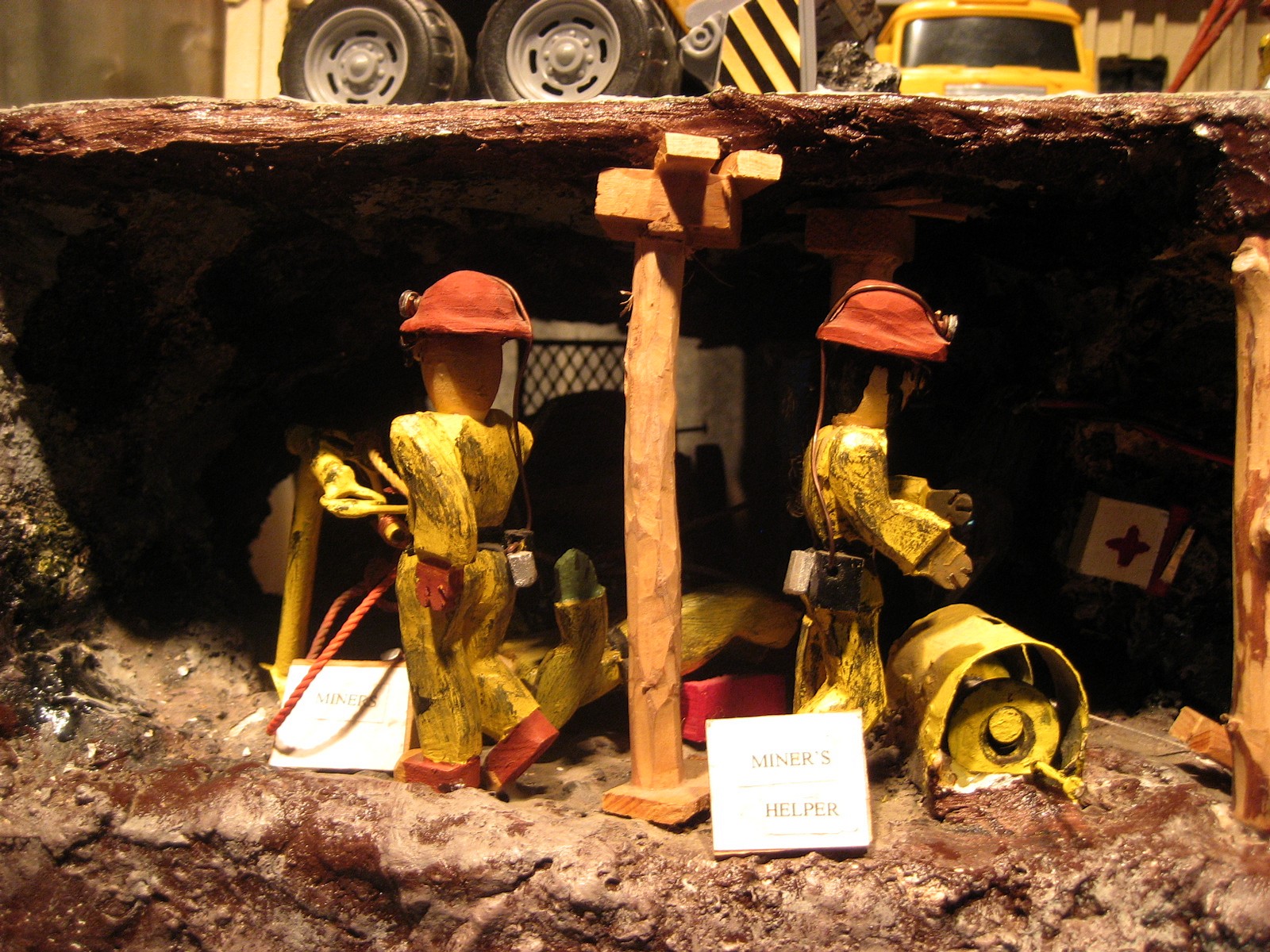
Uranium mine, New Mexico Mining Museum, Grants, New Mexico


New Mexico Mining Museum in Grants focuses on the uranium mines in New Mexico, during their heyday in the 50s through 90s. There's a facsimile of a uranium mine at the museum, where you descend in an elevator and walk through an abbreviated form of a mine. When my mother, Carol, and I visited in December, there was an added, um, thrill when the fire alarm went off accidentally and the staff couldn't turn it off til many minutes later. Carol and I were down in the mine alone and although our heads told us this was just a technical glitch, our nervous systems were saying, "get out, get out!" 

I regret the museum chooses not to address the side effects of uranium mining on the miners and on the environment. When museums omit such important information, the result is we only get part of a story.  The New York Times did a story in March 2012 on abandoned uranium mines in New Mexico, Arizona, and Utah: Uranium Mines Dots Navajo Land, Neglected and Still Perilous. Companies that abandoned mines include Chevron and General Electric, among others. I saw no mention in the museum, either, of the Radiation Exposure Compensation Act, which provides some monetary compensation to individuals exposed to radiation due to atomic testing and uranium mining.   

Uranium Watch is an organization that tries to stay on top of what's going on with uranium mining, both active and passive.


Uranium mine, New Mexico Mining Museum, Grants, New Mexico

We didn't check these places out, but also close to Grants are:

Cebolla Wilderness 
Zuni Pueblo
Bluewater Lake State Park


Thursday, December 20, 2012

Where I Will Not Be Living Next Year

Cultural Center, Gallup, New Mexico


Not long ago, I had the thought that if I were to spend a second year in New Mexico, I might spend it on the western side of New Mexico, such as in Grants, Gallup, or Farmington.

Now that I've visited Grants and Gallup in December (posts to come), I know that while both have a number of qualities to commend them, I'll not be living in either place (or Farmington). 

Too bloody cold.

Thursday, August 30, 2012

Rootless Relocation, Part 1c: Where?


Tres Piedras, New Mexico. Old Pink Schoolhouse Gallery.


In Part 1a, I considered where in the world I'll live next. I narrowed the options down to New Mexico or Mexico..
In Part 1b, I looked at the pros and cons of the two, and decided on New Mexico.


But now --> Where in New Mexico will I live?


What are my decision drivers? 

  • Access to family
  • Access to other parts of New Mexico for exploration
  • Climate
  • Demographics - I want ethnic, cultural, language, and age diversity
  • Interesting geography
  • Income opportunities
  • Recreation opportunities
  • Cost of living, especially housing
  • City size
  • "Romance" factor - for example, do I want the Tony Hillerman New Mexico (Navajo and Hopi territory) or do I want Red Sky at Morning New Mexico (Sangre de Cristo Mountains area)? Or the borderlands factor, close to Mexico?

And do I want to choose my new base first and then look for work? Or look for work and let that determine where I'll settle in New Mexico?

Originally, I thought to look for work from Missouri and let the job hunt lead me to my new rootless base. But I changed direction and decided to look for my most desired base and then look for work. 


Where do I not want to live? 

I don't want to live in:
  • Albuquerque - larger than what I want
  • The bedroom communities surrounding Albuquerque - I don't like looking at the smog that ABQ produces
  • Santa Fe - hate that congested, Anytown USA, main drag going into town, and just not a fan of the overall vibe  
  • Deming - based on research, seemed a little depressed
  • Las Cruces - a sea of beige and bland bounded by highway
  • Mountain communities that attract snow in winter, such as Cloudcroft and Ruidoso 
  • Carlsbad - too far from most of New Mexico
  • Portales or Clovis - might as well live in Oklahoma if I'm going to live in these cities

Silver City, New Mexico


On the fence about: 
  • Silver City - great climate, nice town, but like Carlsbad, a little too remote from the rest of NM, and perhaps too gentrified for my taste
  • Taos - I've been here twice and there are things I like about it, but I'm not in love; also, too much snow 
  • Farmington - Tony Hillerman country, which is attractive, but I just can't get a feel for the geography or the vibe. It'd be cold in the winter. I was cold all last winter in Rustavi. No. Thank. You.

Taos, New Mexico


Possibles:
  • Gallup - Out West, cowboy, cattle drive, rodeo, seductive tumbleweed-desolation vibe
  • Grants - Ditto
  • Truth or Consequences - Hot springs along the Rio Grande, a gritty attitude I find compelling, mild winters, good central location in NM
  • Las Vegas - the Sangre de Cristo Mountains factor, one-day drive from mid-Missouri, good city size, university in town, hot springs nearby
  • Alamogordo - In desert area, but really close to mountain communities, mild winters, good town size, university in town, military base nearby that supports economy, close to Mexico
  • Roswell - Nice size at 48,000 population, university in town, somewhat mild winters

Truth or Consequences, New Mexico


Some resources to help me rule communities in or out:

The city-data.com forums are a place to ask questions about places of interest. There's a rich archive to search previous questions and answers about a locale.

City-data.com itself offers demographic, employment, crime, climate data about locales in the U.S.
There's also good info from the U.S. Census here, from whence you can drill down to small communities.

Craigslist gives researchers a ballpark idea of housing costs and job possibilities.

Meetup gives you an idea of social groups that are active in a potential new base. If there aren't any meetup groups, that's good information, too.

If I had never been to New Mexico before, I'd take a reconnaissance trip out there to personally eyeball the various possibilities. But I have been there - not to all of the cities on my in/out list - but a number of them, so I'm relying on my past visits and the online resources to make my decision.

My process of elimination


I know I don't want to deal with snow, so although I looked at my fence-sitting possibilities such as Farmington, considered Taos in a lukewarm way, and took quite a close look at Las Vegas because of its Sangre de Cristo Mountain proximity, I wasn't excited about any of them. In fact, I wasn't too enthusiastic about living anywhere in NM north of Interstate 40, which I perceive as the snow line.

Silver City may have the closest to the ideal climate in New Mexico with mild winters and summers. But as important as climate is to me, Silver City's remoteness, small size, and gentrified vibe ruled it out for me. Actually, my experience visiting Silver City a couple of years ago suggest to me that there's a lot of social goings-on and recreation activities despite its small size. But the job situation there, based on my research, is rather grim.

Eliminated: Taos, Farmington, and Silver City.


Gallup and Grants have some pull for me, primarily because of the Hillerman Effect. There's also a perception of being Out West in those two towns. Rodeos. Cowboys. Cattle drives. An edgy tumbleweed-desolation kind of vibe that is seductive.

But they're right on the snow belt (I-40 in my mind. And I just can't get enough information on them to tempt me to take a risk. Especially the surrounding scenery. How the town centers look. 

About 18 hours' drive from mid-Missouri, this isn't any longer drive time than competitors in southern NM, so I can't use access to family as an eliminating factor for Gallup or Grants. I also can't say they're too remote from other locations in NM I want to explore than more southern NM competitors. Being smack on Interstate 40, they're on a fast track to most places in NM.

At the end of the day, Gallup and Grants just sort of fell off the possibles list because, I don't know, their voices were too quiet. I'll definitely go visit them, though.

Eliminated: Gallup and Grants


The eliminations left in the running: 
  • Truth or Consequences
  • Alamogordo
  • Las Vegas
  • Roswell

Las Vegas, New Mexico


Both Las Vegas and Roswell are weak candidates for different reasons, but they have these attributes going for them:


Access to family. Las Vegas is within one, long day's drive from mid-Missouri at around 15 hours. Roswell is pushing 16 hours.
"Romance" factor. Las Vegas is near Red Sky at Morning territory, being close to the Sangre de Cristo Mountains. It's Taos Lite and Santa Fe Ultra Lite, without the pretension you come across sometimes in the latter two communities. It has a nice plaza, and the art and jewelry scene. Hot springs nearby.
City size. Roswell has a population of about 48,000. A decent size; similar to my home town.

But:

I just couldn't get too excited about Roswell. My research only pulled up negative comments about the city or, just as damning, not many comments at all. Like Gallup and Grants, I'll go visit Roswell, but I'm not going to live there.

Las Vegas felt like a place I "should" go to. Cold, snowy winters maybe. The Sangre de Cristo Mountains notwithstanding, not in love.

It all boils down to:

Truth or Consequences or Alamogordo.

Truth or Consequences (TC) has a bit of an attitude that I like. The people there seem to have been around the block a few times, lived perhaps a little too hard at times, but now doing OK. Central location that makes it really convenient to explore other parts of NM. Close to larger cities such as Albuquerque, Las Cruces and El Paso, TX. If I want to see what the hell is going on down in the borderlands, I can do that, too. 

Truth or Consequences, New Mexico


Love that it's right on the Rio Grande. Hot springs. Close to some recreation areas. The Spaceport is close, which is kind of cool.

Truth or Consequences, New Mexico


But the population is less than 7000 and the median age is 52.

Very hot summers.

Alamogordo also has hot summers, but it's within half an hour of mountain communities such as Ruidoso and Cloudcroft, with cooler air. It's right next to the immense Lincoln Forest. Close to White Sands Monument. Close to Las Cruces and El Paso.  About an hour closer than TC to mid-Missouri. A population of more than 30,000, with a median age of 37.

But it's more than three hours from Albuquerque and it's not as convenient to lots of NM destinations as TC is.   

Alamogordo, New Mexico


Alamogordo is more diverse than TC in regard to ethnicity, language, and age. The nearby Holloman Air Force Base presumably maintains some stability in the Alamogordo economy.

And I like Alamogordo. Though not edgy like TC, it is pleasant. I like its zoo and the small, picturesque villages nearby such as La Luz and Tularosa.

Not a linear process

As I looked at my options in New Mexico, I went back and forth on various cities. I went back and forth on how much I weighed my decision drivers, such as climate, diversity, community size, etc.

I looked at housing costs on craigslist. Read all of the threads on city-data about the possible relocation locales in New Mexico. Checked distances on google maps between this and that and the other.

I reviewed what I wanted to get out of New Mexico. Interculturally, there is so much that New Mexico has going on. I'm feeling drawn to look firsthand at the historic goings-on with how the U.S. is dealing with people crossing the border illegally from Mexico. In addition to climate preferences, this informs my decision to stick to southern New Mexico for my base.

I had to weigh a great central location for good access to most of NM (Truth or Consequences) against my desire for a larger community and proximity to mountains (Alamogordo). Demographically, Alamogordo also beat out TC for its diversity.  
Alamogordo. My future new home ... for awhile.

Pecan orchard, near Alamogordo, New Mexico

White Sands Monument, near Alamogordo, New Mexico


Next up: Rootless relocation, Part 2: What Will I Take With Me?