Showing posts with label packing list. Show all posts

Friday, April 29, 2016

Antigua, Guatemala: On Shoes and Tourist Traps


These are the shoes I brought with me to Antigua. When I laid them all out, snapped the pic, then looked at it, I thought, sheesh, did I really bring five pairs of shoes with me?

Well, see here, I'm not going to explain myself [erm, because I did that here].  I still brought only a carry-on bag and they all fit (and I wore the boots on the plane).

Besides, the topic of today's post is what shoes you wear and don't wear on the streets of a place like Antigua.

From my experiences in Caucasus Georgia, Ethiopia, and other places, I knew all about the slippery slopes of cobblestone streets, the uneven pavements, the precipitous curbs, and the surprise holes in the ground.

First thing to notice about all of the shoes, with the exception of the flip-flops, is that NONE are open-toed shoes. This is because if you wear open-toed shoes in Antigua - I don't care how much you paid for your urban-mountain-arctic-walking sandals - you will stub your toes on something. This will fucking hurt. I only have the flip-flops with me to wear at mi casa.

The pair of shoes below are perfect for street protection and comfort:


It has soles that grip the surfaces, and the body of the shoes are flexible enough to mold your foot comfortably amidst the round stones and little jutting triangles of not-so-rotund cobblestones. The soles are also thick enough to absorb pointy edges on the surfaces. There is adequate arch support.

The boots below are also quite good for the street, but they aren't as versatile in what I can wear with them. Plus they're better for cooler weather.  Yes, I see they are rather dusty in this photo, but I shine them up when I wear them.


Enough of the individual-shoe critique; you get the idea.

Let's get to the enemy you'll be up against - the Antiguan tourist trap - which manifests in various guises.

First up is a three-fer:
  1. Uneven surface
  2. Sudden smooth surface right next to a textured surface
  3. Gap in the pavement
 
Antigua - walking peril #1

Cobblestones. So picturesque, so quaint, so slippery.

Antigua - walking peril #2


Serious drop-offs from the so-called sidewalk to the street.

Antigua - walking peril #3


Again, different surface frictions. Those tiny height changes between the round manhole and the cobblestones.

Antigua - walking peril #4


OK, here we go. Padlocks! Hasps! Holes! Cracks! Slippery surfaces. Edges of metal straps!

Antigua - walking peril #5


And while you're watching where you put your feet, you'd better also look up and ahead because .....

Antigua - walking peril #6


... Fuckity-fuck. That would really hurt.


But still, nothing compares to the Ethiopian tourist trap:

"Ethiopian tourist trap" - pavement under construction


Wednesday, April 13, 2016

Guatemala: Packing List


Packing for my one-month Guatemala trip was similar to my packing for Playa del Carmen, Quintana Roo, Mexico, back when I studied for my CELTA. I even took the same wheeled bag! The wheeled bag still squeaks by the carry-on police, but just barely. Back when I bought it, the bag was easily within the dimension limits, but the airlines have reduced their boundaries since then.

e-bag, wheeled, carry-on bag


For a month's trip, all of my stuff fit into the above bag and a lightweight backpack.

Clothing

Similarities in both trips included:
  1. Warm weather throughout the stay, so no need to pack for wide variations in temperature; and
  2. No moving around from place to place - I'd be in same accommodations for the full month, which meant I'd have a secure place to bring and store items (e.g. technology) that I might otherwise leave at home. 
A difference in this trip and the Playa trip is ... shoes. Shaking my head on this one. I've never been one to amass great quantities of shoes, but I packed kind of an embarrassing number of pairs on this trip. This is because my Guatemala plans include:
  • Dancing! 
  • Hiking
  • Walking on uneven pavements (think Caucasus Georgia and Ethiopia)
  • Hanging around the house 
  • Maybe some evenings out that require a little bit of dressing up

So, five pairs of footwear. Sheesh. I plan to discard two pairs when I leave, as they've outlived their usefulness to me.

I'll also leave behind some of the clothing items when I go. They are in good repair, it's just that either I'm tired of them or they no longer fit well.

So in theory, my luggage on the return trip will accommodate a few gift items that I'll buy here.


Comfort items


Technology

My online work requires that I use headsets for meetings, so I packed both a primary headset and a backup headset.

Also:
  • AA batteries and AAA batteries because, again, better to have items on hand than to have to take time out to hunt them down in a local store, and because I've experienced store-supply fail.
  • Power strip/surge protector
  • Flash drives for photo storage (in addition to using a cloud backup)
  • Mouse + pad
  • Earbuds and the device I use to listen to podcasts every day
  • Unlocked, international-friendly android phone + phone charger

Laptop

My beloved primary laptop, bought in 2010, is now an elderly lady. By today's standards, she's heavy. Her after-market battery is kaput, so I've got to tether her to an electrical outlet whenever she's on. All of my life is held in her mother-brain.

Take her to Guatemala? No. It was an unnecessary risk to her fragile body and to the electronic trail of my life.

What to do? I know I've got to buy a new primary laptop but I'm not ready for that research and decision yet.

Well, I needed a backup, anyway, to my online work practice, so I bought a toy laptop.

Oooh, sha, she is so airy-light! And so come-hithery in her sexy, red dress. And at the price (well under $200), if she gets stolen or something else dire, I will be sad, but will not have suffered a devastating loss.

I loaded into her brain only those documents that I believed essential for my needs in Guatemala. Two reasons: 
  1. She doesn't have much storage space. 
  2. She can't divulge intel that she doesn't have. 

Backpack

I have a handsome backpack that I use for my primary laptop, for weekend travels, for some flights. I took it to Playa del Carmen, to Ethiopia, to Caucasus Georgia, to Dubai, to Istanbul.

e-bag backpack that I left at home


It looks as youthful today as it did when I bought it years ago.

I didn't bring it to Guatemala, however. Nope, I decided to go lighter and cheaper. I'm guessing I'll do a lot of walking in and around Antigua, and I wanted to reduce the carry load. This decision is supported by my decision to bring my toy laptop, Little Red, which requires a bag with less space and durability than my primary laptop.

I also wanted an inexpensive bag, both in price and in looks, to reduce the number of envious looks from would-be thieves. Guatemala has a bit of an unsavory reputation, you understand.


Little bags and accessories

The possibility of dancing or evening-going-out required some thought about packing small bags. Being a solo traveler, I don't have a partner to watch my bag for me at a table while I step away for dancing or even going to the restroom. So I need to be creative in how I carry stuff with me to these kinds of venues.

Choosing clothing with pockets is a good first step.

I also have three utilitarian terry-cloth, zippered wrist bands in which I can stash a credit card, some bills, and a key. (I've got one each in navy, black, and red. I may buy a new one in light beige.)

Gogo terry-cloth wristband with zipper. Source: Amazon


And, yes, I did bring the ubiquitous, LBFP, that is a tourist staple. The Little Black Fanny Pack. Or, in my case, the belly pack. Got it at a second-hand store on the cheap about a year ago.

Result: For my EDC (everyday carry) to and from language school, I've got my LBFP in front of me, attached like an infant, with my camera + reading glasses inside. I've got my wristband with some cash for the day on my wrist.  In my nondescript, blue backpack, I've got a wallet and the keys to my lodging. Both of these are out of reach of easy pick-pocketing, but of course, if someone wants to get serious about things, they'll just take the whole thing from me.

I use the backpack to cart groceries back home after class.

I feel equipped.


The phone issue

I bought my android a couple of years ago, thinking I'd be moving to Oaxaca for a year, and wanting a work backup to my laptop. We got off to a rocky start, but the edges have been smoothed over.

Coming to Guatemala was going to let my android run free like the wind, performing magical tricks that one likes to see performed when one travels outside one's homeland.

Most specifically, I intended to buy a local sim card so I could make and receive local calls. Thus far, however, there seems to be no particular need for me to make or receive local calls. Relying on email for local communication suffices, and I have plenty of wifi access here, including at my lodgings.

As for calling folks back home, I've used my phone to call them via Viber (free), Skype (I bought a one-month subscription to call the USA from Guatemala), or in a pinch, Google Hangouts for real-time communication and email for non-live communication.


Monday, April 11, 2016

Guatemala: Coffee and Salt, the Essences of Life


Mmm, salt. Source: Amazon.


I make no apologies for this: I packed both salt and, yes, get this --> instant coffee (to Guatemala! Coals to Newcastle!) for my trip to Guatemala.

Thank the baby deity I have.

I'm sure there's salt somewhere in my temporary digs, but without searching through various cabinets or finding my hostesses at home to ask, I don't care one whit where it is. Because I've got my own supply! Not a moment's worry have I had about where I can find this precious mineral.

There's coffee here, too, but the coffee maker is on the fritz, so making it requires me to do some technical things with a hand-held filter thing and a pan of heated water, and I haven't yet figured out how to make the stove burner as hot as it needs to be.

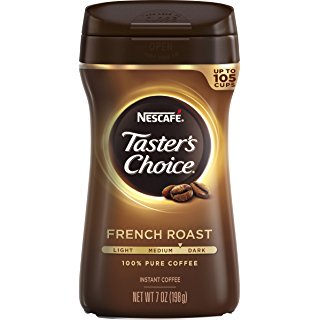
Again, it matters not! Because I have my own coffee with me! And before you scoff, let me tell you it is addictive - it's Nescafe Taster's Choice French Roast. Not the classic or the other flavor. These are fine, but the french roast - smells good, tastes good, and it makes me sigh when I take a drink. Not to mention injecting me with the requisite buzz. And my hostesses have a microwave and I can work it and therefore heat up my mug of water to fold said loamy-brown, crystalline drug into its liquid embrace.


Mmmmm. Sometimes I get the packing just right.


Wednesday, April 6, 2016

Guatemala: The Almost Pack Fail


Canon SD600

I learned my lesson about camera backups in Ethiopia.

After that experience, I bought two used, vintage Canon Powershot SD600s to replace the exact model I lost in Ethiopia. Redundancy of peripherals and all that. Plus it was a good travel camera.

These days, I have three used cameras plus a pissant phone camera. The backup system has served me well in the four years since Ethiopia, although cracks have appeared, and a change in the future looms.

For my trip to Guatemala, I packed these cameras:

  1. Primary: One of the Canon Powershot SD600s
  2. Secondary: A used Canon Coolpix that daughter handed down to me last summer
  3. Tertiary: My Moto G phone camera, a last resort only, due to its miserable photo quality

I chose the Coolpix to bring instead of my backup Canon because I am down to only one Canon battery, the two that I'd had having finally died of old age. I only bought one replacement battery because the things are pretty expensive, and I am on the fence about when I'll buy a new camera, which will certainly use a different model of battery. With the Coolpix, I'd have a spare, charged battery on hand when the Canon's battery needed to be recharged in Guatemala.


The morning of my departure, I inserted the cameras' SD cards into my primary laptop so I could upload their contents, thereby giving me clean slates for the trip.

Oh, wait.

Do I have an SD slot in the little red toy laptop that I bought for the trip? Why .... no.

Jeez, OK. Where the heck was my camera-to-device cable that fits into one of Little Red's usb ports? Oh thank goodness! Found it! Worked just great for the Canon. Would it work for the Coolpix? No. Nooo. Who'd've thought? 


This almost-fail fell into two categories of travel mishappery: 
  • Complacency, or more accurately, just plain sloppiness of thought and preparation
  • Too smart for my own good

Close call.

I left the Coolpix at home and replaced it with the second Canon. 


Monday, September 28, 2015

Taking a Budget Road Trip, Part 6: Road Trip Technology


Louisiana Road 3083


My biases

1. Budget
This is a series about budget road trips. Therefore, the recommendations reflect same.


2. New not always better
A new technology might be better than the old. And it might not be. Its value depends on the user's wants and needs, in addition to the road trip route and a reasonable risk management plan.

A new technology can actually result in an unintended consequence of engendering a false sense of security, which - at worst - can result in a trip disaster.


3. Hidden costs
Every piece of equipment carries a cost in regard to:
  • Safe-keeping from theft (think big-ass camera)
  • Protection from damage (think sizzling summer heat inside a parked car while you go for a hike)
  • Worry about forgetting it somewhere (motel room, hanging on restaurant chair, on a restroom counter) 
  • Practical portage (how much gear do you want to carry on your shoulder, around your neck, or in your pockets?)
  • Freedom to be spontaneous (Wow! A street festival! Let's stop! Wait. What about our stuff?) 

4. The joys of being out of touch
Some simple joys of a road trip are:

You deny yourself these pleasures if you tether yourself too closely to technology, including social media, texting, and phone calls.


Mule deer crossing, Bosque del Apache road, New Mexico.


Technical gear recommendations

Into this category, I place: 
  • Cameras
  • Phones (smart and dumb)
  • Laptops, tablets
  • Dedicated devices for listening or reading

Cameras

Do you have a big expensive camera? If yes, think carefully about the pros and cons of taking it with you on a road trip.

Decision variables include: 
  1. What are the expected temperatures on your route - will it be too hot to leave the camera in your car for several hours while you do something without the camera?
  2. How anxious do you get about theft - will you worry too much about leaving the camera in your car on occasion? 
  3. How will the camera - if you have it on your person - affect your freedom of physical movement if you go on a hike, go dancing, walk through a museum, visit an amusement park, walk to the hot springs for a dip, attend a crowded festival? 
  4. What do you generally do with your photos? Post them on social media? Scan through them and then toss the SD card in a drawer? Produce creative work for personal or professional satisfaction?
  5. Do you feel confident about how to use your big, expensive camera? 
  6. Is photography a major component of your road trip or is it a visual footnote of your trek? 
  7. What are the photographic subjects you're likely to encounter on your road trip? Jaw-dropping scenery that you will stop to contemplate? Micro-beauty such as flowers or insects? Or mostly fun shots of people, places, and things you come across to document your trip?
  8. Depending on the answers above, is your phone camera good enough for your needs? Do you have an inexpensive point-and-shoot that you could take with you?

Phones

Dumbphones
Do you still only have a dumbphone? No big deal.

If you want a mapping application, then you can buy a dedicated GPS device, although this is a financial investment that may not be worthwhile. Better to borrow a device, if possible. Or maybe you're bringing a tablet with you, and you can use that for your mapping.

But my experience is that a paper map works just fine. Plot out the trip's (or just a day's) route in advance and mark the route with a bright highlighter marker.

A mapping application is most useful when I'm looking for a particular address within a city, and when push comes to shove, I can call the destination point for directions.

Smart phones
  • See Road Trip Apps below. 
  • Consider taking a spare charging cord and keeping it in your trunk, in the event you leave one behind in a motel room.
  • If you don't use a pass code to access your phone data at home, think about using one while you're on your road trip. When we're outside our familiar surroundings and routines, some of us get more alert, while others of us get fuzzier. If you fall in the latter camp, then you are more vulnerable to leaving your smart phone behind in your motel room or at a restaurant. 
  • Consider enabling the emergency alert feature on your phone, if it isn't already. You never know. 
  • Be a fanatic about charging your phone. If you've got the ability (see Power Recommendations below), think about keeping your phone plugged in while driving. 

Laptops, tablets
On a road trip, I do take my laptop. I've weighed the pros and cons and decided that having my laptop with me maximizes my enjoyment of a road trip.

But many folks are extremely comfortable conducting all of their online activities on their smart phones. They may have cameras with wifi capability that allows them to upload photos to their preferred internet destination.

As with the camera variables, think through if you really want to bring a laptop or tablet on your road trip. Remember that every piece of equipment you bring adds to your protection and portability "cost."


Dedicated devices for listening or reading
Currently, I diversify my gadgetry portfolio by having an mp3 player for my music and a basic Kindle for my electronic books. I bring both on road trips.

Dedicated device pros:
  • I don't drain my smart phone's juice when I play music or read an e-book
  • My mp3 player and Kindle have long battery lives
  • Arguably, I enjoy better sound via my mp3 player
  • It's easier to read ebooks on my Kindle than on my phone
  • I just feel generally better when I diversify my limited resources across several devices

Cons: 
  • The more gadgets I take on a road trip, the more I have to babysit
  • If I've got limited charging capacity in my car, then I've got to be assiduous about charging the devices at night when I've got access to wired resources
  • The assumption about better sound on my mp3 player is untested; it is possible the sound is just as good on my phone
  • Although I don't want to read an ebook on my phone, I could choose an audio book instead and listen to that on my phone
 

Highway 54 train between Corona and Vaughn, New Mexico. 2013.


Power recommendations
Source: Cable Wholesale

Three-prong to two-prong plug converter
You never know when your overnight accommodations will lack accessible three-prong wall outlets. A converter costs less than a dollar, doesn't take up much space, and you can find one at any big box store.


Surge protector power strip
Whether you're staying in a motel, at a friend's house, an airbnb or a couchsurfing place - outlets can be scarce. If you've got a travel companion, this could double your demand for outlet access.  If you don't travel all that much, just bring a power strip from home. Throw it in your trunk and only bring it out if needed.

If you decide to buy a strip: 
  • Check for roominess between the plug slots. It's annoying to have three or four plug slots on a strip, but the slots are so close together you can't actually fit two plugs right next to each other if one of the plugs is fat. 
  • Consider cord length. My power strip is designed as travel-friendly (with universal plug slots), so its cord is only ~ 13". This is great for packing, but sometimes it presents minor challenges in a motel room where the only available outlet is hard to reach. This writer uses this travel-size power strip. It has no cord at all.  
  • If you don't travel much, then a longer cord might be more practical for you. In that case, choose a power strip that you'll like using at home so you don't add to your special-occasion clutter load.

USB wall charger
USB wall charger. Credit: Philips
I've used this one for several years, and it's worked well for me. I like the blue light that glows while mine is in use because I'm less likely to forget it in a motel room. I also like the foldable plug. I can plug the charger directly into a wall outlet or into my power strip. In the latter, however, it falls into the category of a fat plug, so this sometimes affects my ability to plug in neighbors.

If I were to buy one today, I'd get one with two USB ports like this one.


Car lighter adapters
OK, yes, today's cars have handy USB ports and outlets stashed all over the place. If you have such amenities, then skip ahead.

My car is 20 years old, so I've got one power source for charging and playing music: My lighter.

I do have two lighter-based powering gadgets, but they are geezers.


Portable power inverter. Credit: ebay seller

One is a big, heavy, one-outlet power inverter that I bought back in 1990 maybe. I bought it for the road trip to Alaska I took with my daughter.

Upside: It still works. Downside: It's big, it's clunky; it has only one plug-in. I have to use my USB adapter to charge devices on it.  And while I'm charging something on it, I can't listen to my music player because I've only got the one lighter and the one port. 


FM transmitter device. Credit: ebay seller.
My other gadget is a Gigaware FM transmitter device to plug into my mp3 player. It's been a wonderful tool for me on road trips. In the past year, however, I have to place the player in just the right position to get the appropriate volume, so it's on its way out.

When I replace the above two devices, I'll get an FM transmitter that also has a USB port. This one, perhaps. Consequently, I'll be able to listen to my playlist and also charge my phone. Evidently, such a device would allow me to talk on the phone hands-free if I receive a call. Nice, if true.


Pearl Street Mall, Boulder, Colorado.


Road trip apps


I offer my recommendations below. Manage your expectations. It is a humble list.

Road trip planning and management
Evernote is a well-designed application that you and any road-trip companions can use like a file cabinet. Toss into Evernote screenshots, websites, photos, articles, lists, links - a repository of information that helps you plan and manage your trip. Here is a list of articles about how to use Evernote for a road trip. Set it up on your desktop, laptop or tablet, and sync it to your phone.

Directions
I use Google maps.

Gas price app
I'm trying out Gas Guru. It seems straightforward. Gas Buddy is more popular, but seems to have too much interaction.

Road attractions
Roadside America has an app that looks very cool. Alas, it is only for iphones or ipads.


Related links:

Updated: Taking a Budget Road Trip, Part 5: Loose Ends
Updated: Taking a Budget Road Trip, Part 4: Pack List
Updated: Taking a Budget Road Trip: Part 3: Food and Drink
Updated: Taking a Budget Road Trip: Part 2: Lodging 
Updated: Taking a Budget Road Trip: Part 1: The Basics

Or click on the Take a Road Trip tab at the top of this blog. Or click here.

Tuesday, June 30, 2015

Updated: Taking a Budget Road Trip, Part 4: Pack List

On June 24, 2011, I published Taking a Budget Road Trip, Part 4: Pack List. This was from my Take a Road Trip series.

Below is the updated version:

Road to Monument Valley. October 2007.

There are 6 categories for road-trip packing:

1.    Personal
2.    Picnic
3.    Road-trip comfort
4.    Emergency
5.    Camping, if applicable
6.    Tourist gear


Clothes drying on a tree branch. Rustavi, Georgia (Caucasus). September 2011.


Personal gear

Clothes - How much should I pack?

There should be an algorithm to calculate the answer to this question, considering:

Duration of trip + number of days you're willing to wear each clothing item before washing it + (un)willingness to wash clothes in sink or laundromat + diversity of temperatures on route + diversity of road trip activities, e.g. athletic, casual, or dressy.

Here's what works for me:
  1. If my road trip is for a week or less, I don't want to launder clothes on the road, so I'll bring enough to last the duration. 
  2. If my road trip is for longer than a week, I'll assume a trip to a laundromat and pack accordingly. Note: Most motels have coin-operated washing machine and dryers.
  3. I wear trousers for three days and a shirt for two days.
  4. I pack specialty items (e.g. a dressy outfit) in a separate bag and leave that in the car until I need it.
  5. If temperature variations are in play, then I think layers, and I also pack a coat or jacket. I usually keep temperature-specific items in the car til/if needed, rather than pack them in my main luggage.

If you over-pack, the main consequence is that it will be more of a hassle for you to find stuff, carry stuff, and fit it in with other stuff. Let your frustration threshold be your guide as to how much you want to avoid these consequences. Otherwise, road trips are forgiving to chronic over-packers.

Shoes

For God's sake, bring a comfortable pair of shoes! Uncomfortable shoes will keep you from doing or enjoying activities that you would otherwise love to do.


Something warm

No matter how warm the destination, there will always (ALWAYS) be a place that will freeze you out. A motel room. A restaurant. A museum. A nightclub. A cave.

Bring a sweater, sweatshirt, shawl, jacket - something - that will keep you warm when that happens.
If you fail to do this, do not whine about how cold you are. At your next opportunity, stop at a second-hand store and buy something.

Toiletry bag

My perfect bag:
  1. Has a little hanger or velcro loop design so I can let it hang from a towel rod or door hook. It won't get damp from a wet counter surface. It won't take up limited counter space.
  2. Has compartments that let me segregate cosmetics, dental care items, cleansers/lotions, and all the rest: deodorant, small scissors, mirror, comb/brush, tweezers, clippers. Three compartments needed at minimum, but no more than four.
  3. Fold/rolls into smaller mass for packing

eBags Weekender

Luggage

I love my lightweight, durable eBag Weekender bag for road trips. The outside and inside compartments maximize organization. Adding the three large eBag packing cubes maintains order, and if I pack the cubes so each has all that I need for one or two days, then I can just take the cube and my toiletry bag into the motel and leave the larger bag in the trunk.

If you looked at the price of this bag and blanched a bit – no worries. I invested big money in this bag because of my long-term needs. For a budget road trip, if you don’t already have luggage you like, then check out your local thrift stores such as Goodwill, Salvation Army, etc. and buy something that looks like it will work for you. Or borrow a bag.


Dirty laundry

Option 1 - I collect my dirty laundry in one of my packing cubes and keep it in my "weekender”

Option 2 - I toss it into a plastic or cloth bag and keep it in the trunk.

Either way, it's easy to lug it to a washing machine on the road or back at home.


Picnic gear

For now, let's assume camping is not involved. The purpose of the picnic gear is to let you enjoy good food and drink without having to go to a restaurant. It also lets you manage your time and itinerary - you can eat when you want, where you want.


Lunch on Jemez scenic road, New Mexico. August 2013.


Cooler

My perfect road-trip cooler is my old Igloo Playmate cooler (in photo above):
  1. Has a top handle for one-handed carrying
  2. Is large enough to hold one small bag of ice (i.e. 7 pounds) + 4-6 cans soda + food items for a couple of days (e.g. hard-boiled eggs, roast chicken or beef, cheese, some fruit, and carrots/celery)
  3. Is small enough to fit on the floor behind a front seat - and small enough that I feel comfortable replenishing the ice from a motel ice machine
  4. The lid slides open with the push of a button
  5. Because of the tent-like peak, I can over-load it a bit.

The exterior dimensions are about 14"x10"x13." That 13" is the height, which is misleading as it measures the peaked lid. The Playmate "Boss" seems to be the closest to my older model.

Unless I'm going to camp, this size cooler is fine for a road trip. There are grocery stores everywhere - no need to carry more than a couple of days' vittles at a time.


My camp box.


Camp box (or "chuck box")

I have a cool jeweler's sample box, made of fiber board, I think, bought at a flea market, that I re-purposed into a camp box. Important features include: 
  • It has a handle on top for one-handed carrying
  • The lid closes securely with two draw bolt latches
  • It has two shelves that are are deep/tall enough for me to place smaller, clear-plastic containers on them for organization 
  • It is sturdy
  • It's big enough to do the job, but small enough not to take up too much vehicle space

You can make a great one on your own using a clear plastic storage bin and smaller transparent storage containers within. Watch the dimensions; you don't want to go too big.

My camp box is always stocked with:
  • Salt and pepper
  • Plates (plastic washable/reusable or paper)
  • Utensils
  • Corkscrew
  • Can opener
  • Sharp knives
  • Table cloth
  • Cloth towel
  • Aluminum foil
  • Fire starter
  • Matches
  • Rope and clothes pins
  • Candles
  • Cups
  • Sanitizer
  • Recycled plastic grocery bags that I can use to collect and dispose of trash - these are tucked into an empty, cardboard paper-towel tube to conserve space 
  • Ziploc-style bags - quart size
  • Small bottle of dish washing liquid

Bag for consumable goods

In this bag, I throw dry items that I'll consume along the way, such as:
  • Bread
  • Instant oatmeal
  • Ground coffee
  • Paper towels
  • Three 1.5-2 cup, round, microwave-safe plastic containers with lids  - for oatmeal and other picnic-style menu items that require bowls

By using a bag instead of a bin or basket, I can collapse the bag after the items have been consumed, which opens up space in my car.

Bag for durable goods

This bag is for small appliances that I might never need during the trip. Depends on what's in the hotel rooms I end up in.
  • Small coffee maker and, depending on type, any accessories (e.g. filters)
  • Hot plate
  • Small pot with lid to heat things up in
  • Maybe you're a tea drinker and dislike the after-coffee taste of running water through the motel coffee maker. On a road trip, you can bring your own tea kettle or brew pot.

A sibling traveler, making himself comfortable.


Road trip comfort

If a road trip is intrinsically good (and it is), bringing familiar comfort items from home make it even better.

Some ideas:

Books: real, virtual, or audio. If you're a regular reader, this is a no-brainer. You know you'll bring reading material. If you're an occasional reader, consider a book that relates somehow to the places along your road trip path. Or a book about road trips. Here are a couple of road-trip reading lists, both from A Traveler's Library.

54 Road Trip Books and Movies (by state)
Top 5 American Road Trip Books and The List

And here's a literary perk of road trips (or any trips) --> This is the perfect venue for reading trashy, brain-candy crap that you secretly crave, but can't bring yourself to possess in your "real" life. Go ahead - buy that National Enquirer!

Favorite pillow - for car napping (especially when traveling with someone else) or for augmenting inadequate motel pillows

Blanket - not only does this fall into an emergency pack list, but if you're traveling with someone, it's nice to nap when you're not driving. Even in the summer, a blanket is comforting when the car a/c is on.

Good music - If, like me, you've got an older model car, invest in a cigarette lighter FM transmitter device to access your music player.


Emergency preparation
  1. Before you leave on a road trip, take your vehicle to an auto service shop and ask that they do a trip   check. Change your oil.
  2. Join AAA or a similar roadside assistance provider. Batteries drain. Starters die. You lock the keys in your car. You get a flat.
  3. Have a blanket in the car.
  4. Pack a flashlight in addition to the flashlight app you may already have in your smart phone.
  5. If you're traveling with others, bring your spare car key so that two of you have a key.
  6. Leave a rough itinerary with someone back home.
  7. Keep a jug of water in the car.

Grand Canyon campsite. September 2007.


Camping

If you're already a camper, you know what to bring, and you've probably already got the equipment.

If you're not a camper, don't be intimidated. Here are some easy-button basics for you to bring:

Tent. Unless you plan to do a lot of camping after your road trip, just get a cheap tent. Know that when the label says it's a two-man tent, that's a lie. Get a 3-man tent if there are two of you, and a 4-man tent if there are three of you. Get a dome tent. It will be easier to put up and you can pick it up and move it at will, until you stake it down. Do buy a tarp to go under the tent. These are also inexpensive and you can use them for other things in the future. Get a tarp that is a little smaller than the tent.

Sleeping bags. You can also get sleeping bags cheaply. Or borrow them. Or make bedrolls from blankets and a comforter.

Pillows. Do bring pillows from home - you'll be much more comfortable.

Socks and knit hat. Clean socks and a knit hat will help keep you snug in your sleeping bag and tent. Remember that cotton will not keep you warm.

Cook stove. Yes, you could build a fire and cook on that. ... BUT: It's not uncommon for a park to have a no-fire order. Buy or borrow a cook stove. (If you borrow it, return it clean.) Alternatively, you could skip the cooking altogether. Instead, pick up picnic foods that don't require cooking.

Cooler. If you plan to do a lot of multi-night camping on the trip, then consider getting a larger cooler to avoid spending too much time replenishing food and ice supplies. Weigh this carefully against the vehicle space it will consume for the entire trip. Another option is to just take an additional small cooler.

Light. At minimum, you'll want a flashlight for each person in your party. This is in addition to any flashlight app you have in your smart phone.

Check above for the list of things I stock in my camp box. All of these will come in handy if you camp.

If this article were about going on a camping trip, there would be a lot more detail. But this is about a road trip.


Tourist gear
  1. Camera (with extra memory card and an extra battery)
  2. Binoculars
  3. Spiral notebook or journal
  4. Pens
  5. Addresses of people to whom you want to send postcards
  6. Postcard stamps that you buy in advance
  7. Maps. Before I leave on a road trip, I pick up a U.S. atlas for less than $10 at a local Walmart. Then I pick up free state maps at each state's welcome center, which is usually the first rest area after you cross the state line. I recommend these even if you’ve got a smart phone with map and GPS features. Paper maps give you - literally - the big picture of where you're going, alternate routes, and where you might want to go. Also, phones fail. Satellite and tower connections fade in and out. The paper map is right there. 


See more details about gear in Part 6: Road Trip Technology.

To see all chapters of the Take a Road Trip, click on the tab of the same name at the top of the blog. Or click here.


Friday, May 10, 2013

Rootless Lit: Eighty Days


I was put on to this book by Maria Popova of Brain Pickings, via her post, How To Pack Like Nellie Bly, Pioneering Journalist.


The book is Eighty Days: Nellie Bly and Elizabeth Bisland's History-Making Race Around the World.

Credit: Barnes and Noble


The book is an account of two American women's race in 1889, to "girdle the earth" - one going east and the other west - with three objectives: 1) travel around the world in less than the "80 days" in Jules Verne's famous book about a man's round-the-world adventure; 2) do it faster than the other woman; and 3) sell newspapers for the World and Cosmopolitan.

In addition to the plot of the journey, Matthew Goodman puts the story in the context of the day, touching on topics such as: 
  • discrimination against women
  • racism
  • ethnocentrism
  • how the American railroad affected culture and enterprise
  • "stunt" journalism
  • working and living conditions of laborers in the U.S. and elsewhere

In re: discrimination, racism, and working/living conditions it is, at turns, inspiring and disheartening to compare the past with the present. 

Technologically, it's nothing short of amazing to consider how far the world has progressed in transportation, medicine, and communication in the span of 125 years. 


On women

I read Eighty Days just after re-reading Isaac Asimov's Foundation series. I don't remember the point at which I realized Mr. Asimov made virtually no reference to women, but it slowly came to me that in his future universe - notwithstanding all of the scientific advances over the thousands of years into the future he wrote about - it was a universe in which, with rare exception, only men figured in current events. And even in the unusual case where a girl or woman played an important role, Mr. Asimov assigned her with the usual, circumscribed boundaries for women: the use of her beauty or feminine charms to achieve her aims. Why couldn't an intelligent author like Mr. Asimov factor in the possibility that thousands of years hence, women might join the mainstream of history?

It was in this frustrated frame of mind that I read Eighty Days, not to be surprised by the many discriminations against women during the 1880s the author shares, but to consider how, in so many parts of the world today (including the U.S.) women are still denied self-determination. Said abilities to make one's own choices about getting married, getting divorced, becoming pregnant, giving birth, getting an education, how to dress, where one can walk, if one can drive, to whom one can speak, places one can enter, where to work, how to create, all restricted under the guise of religion, protection, "respect for women," or culture - thereby rationalizing the bars on the windows.


On time

Until I read Eighty Days, I had no idea that it was the railroad companies that established a standardized time in the U.S. Fascinating.


The originals

One of the disappointments I had in Eighty Days was the dearth of direct quotes from Nellie Bly and Elizabeth Bisland's books. You can find the originals here:  
  • Nellie Bly: Around the World in Seventy-Two Days - audio - here or here.
  • Nellie Bly: Around the World in Seventy-Two Days - online text - here
  • Elizabeth Bisland: In Seven Stages: A Flying Trip Around the World - online text - here
  • Elizabeth Bisland: In Seven Stages: A Flying Trip Around the World - downloadable to ebook
  
Of the two women, it seems that Ms. Bisland was more gracious and more positive in perspective than Ms. Bly, even though the latter was the far greater celebrity of the time. For example, where Ms. Bly saw cause for complaint, Ms. Bisland saw beauty and excitement.


For me, Eighty Days served as a reference for comparison between the world as it was only 125 years ago and how it is today, and for that, I appreciate Mr. Goodman's work.

I do still shake my head at Nellie Bly's decision to buy a macaque monkey in the middle of her journey, wondering "what was she thinking"?! And it's one of the loose ends Mr. Goodman leaves for the readers - what eventually happened to the mean creature, forced to go around the world in a small cage?

Thursday, March 14, 2013

Portable: Duct Tape Refresher

You get a little complacent when you're settled in one place for awhile.

And so it was that I recently needed to dig out a large roll of duct tape from my camping gear and make a new portable pack.

So I looked around for a business card .... and went back into the past.


Friday, January 18, 2013

The Overnight Checklist


When I've got my shit together, here's what I do the night before an overnight road trip:
  1. Gas up the car
  2. Charge the camera batteries. (Note batteries, not battery. See here.) 
  3. Charge the phone. 
  4. Charge the mp3 player. 
  5. Print off or write down directions. **
  6. Print off or write down lodging information: phone number, reservation number if any. **
  7. Re-check the weather to make sure I pack the appropriate clothing.
  8. Set the alarm. Set two if it's important to get up super early. 
  9. I decide if I'm going to have a meal on the road, figure out what I'll have, and put it in/take it out of the freezer or prepare it .. .and pull out the desired cooler or other carrying case.
  10. Get my toiletry bag out so I can load it up the next morning. 

Road to Tucumcari from Las Vegas, New Mexico


**I don't have any GPS tools and I don't have a smart phone. 


Thursday, August 30, 2012

Rootless Relocation, Part 2: What Will I Take With Me?


In Part1a, Part1b, and Part 1c, I figured out where I'm going to live next.


Alamogordo, New Mexico.

I don't have a job there yet. And I don't have a place to live yet, though my current plan is to rent an apartment.

But I've got a pretty good idea what I'm going to take with me. I've got a pretty good idea because I don't have much to take. It will all fit into my 1995 Toyota.  

I'm so glad I kept my camping gear because I'm going to need it.

These are my worldly goods with which I'll set up housekeeping:

  • My car
  • Two camp chairs with cup holders (yay! I already have furniture!)
  • Two sleeping bags
  • Blankets
  • Some pots/pans from my camp box
  • Flatware from camp box
  • A few plates and cups from camp box
  • Pillow
  • Coolers
  • Two plastic storage things with drawers
  • Shelf stereo
  • Clothes
  • Clothesline and  clothespins
  • Aluminum foil
  • Lantern
  • Tent
  • Two plastic storage bins
  • Two bath towels
  • A few dishtowels and dish cloths
  • Rubbermaid rectangular folding table, approx. 2'x4' (more furniture!)
  • Laptop and other electronics 
  • Some framed pictures, if there's space in the car

I used to have a stove top espresso maker, but I don't know what happened to it. I'll scrounge for one of those before I go.

Well. I guess that's it.

Anything else I'll need I'll have to pick up in Alamogordo. But whatever the item might be, it'll have to fit my  design aesthetic: Rootless Minimalist. 


Wednesday, August 1, 2012

Airline Freebies You Should Collect

Ethiopian Airlines, amenity kit


You can get some cool travel stuff on your flights.

Based on the detritus I see when I debark planes, I think most passengers discount the post-flight usefulness of these items. 

A caveat: Domestic flights in the U.S. are pretty Spartan when it comes to freebies. So this post is based mostly on international flights. But: Keep your eyes peeled on domestic flights as you pass through business and first class when you debark at your destination.

A number of airlines provide these free goodies on international flights, even for cattle class:

The amenity kit: 
  • Lip balm
  • Sleep mask
  • Slipper socks
  • Ear plugs
  • Tiny toothbrush and toothpaste
  • A container to hold these items


In-flight meals
  • Packaged crackers
  • Packaged cheese
  • Packaged jam or honey
  • Packaged moist towelette
  • Pretty-good quality paper napkins
  • In some airlines, free alcohol dispensed in cute little sealed bottles

Lip balm

I'm not a user myself, but many fellow travelers are addicted to the stuff. It's a nice item to give to someone.


Sleep mask

Generally, I don't need a sleep mask, but many people have a terrible time sleeping when there's the least sliver of light in their vicinity. So it makes a thoughtful small gift to a light sleeper.

For an ESL teacher, sleep masks are great tools for classroom games. For example, split a class into two or more teams. Each team has someone who wears the mask while the other team members direct him through a maze of obstacles using only English. The team who gets its masked member through the obstacle the fastest wins.

Slipper socks

Good to wear to bed in a cold climate, whether on your feet or your hands. Pitch 'em out when you want. Or continue to wash and wear.

Ear plugs

I've found that in some countries, people PLAY THEIR TELEVISIONS REALLY, REALLY LOUD! OR THEY TALK VERY LOUDLY! OR THERE'S CONSTRUCTION GOING ON NEXT DOOR! OR THE CALL TO PRAYER BY THE MUEZZIN IS RIGHT OUTSIDE YOUR WINDOW!


Ahhhh, so anyway, even these cheap ear plugs take the edge off the volume. They make the difference between painful and tolerable.

Collect all unopened packages of ear plugs you can find, left behind by fellow passengers. Keep one pair in your personal bag. Just a few weeks ago, I pulled a pair out of my purse when I found myself too close to the speakers during the international dance competition in Istanbul. 

Tiny toothbrush and toothpaste

Collect for:
  • Houseguests who forget their toothbrush 
  • Domestic flights in your personal bag or a pocket
  • Cleaning grout or other hard-to-reach areas

Container the freebies come in

I use the Ethiopian Airlines case to keep my small electronic paraphernalia.

Until recently, Turkish Airlines put its comfort items into a nice, ivory-colored, leather-like zippered bag that was useful as a small toiletry bag. Now TA uses a flat metal container; don't know why.

Other potential uses for such bags:
  • Small toys or crayons for kiddos
  • Sewing kit
  • First-aid kit
  • Hand laundry kit (line, clothespins, universal plug)
  • A tidy place to pack a collapsible hat, lightweight scarves or bandanas
  • For one-night trips to hold underwear, socks
  • Pack a swimsuit    

Packaged crackers, cheese, jams, etc.

If you've got a long layover for a second flight after you debark, you can save some serious money by conserving such items til you land.


Alcohol

Unless you've got to move through another security check to board a next flight, conserve a sealed bottle of your desired alcohol for:
  • A relaxing drink upon arrival at your destination; or
  • A sweet token gift to someone

Decent-quality paper napkins

If your destination is a developing country, then these will come in handy for toilet paper. Stash your extras into a snack-size ziplock bag you packed. (You did pack ziplock bags, didn't you?)  


Debarking through business or first class

Take a look at what these passengers have left behind but not used, such as the ear plugs, socks, or whatever your favorite amenity is.  Collect one or two on your way out.


Amenity kit reviews

Some folks take their amenity kits very seriously.

Amenity Kit Review series from Frequently Flying

Exceptional Amenity Kits From First-Class from Fodor's

In Airline Gift Bags, A Chance to Sell from the New York Times


Saturday, February 4, 2012

Where Do I Live? Revisited

Awhile back, the question arose about how we define where we live versus visit.

(I know where I want to live in the future - some place warm. )


But this post isn't about that so much.

Instead, it's about a guy named Dave and his Longest Way Home. His "global quest in search of a place called home." 

After seven years on this journey, he has some thoughts on:

*I have a friend who selected a pre-paid funeral plan that includes an international clause, ensuring her body will either be cremated in the country where she drops (and the cremains shipped home) or her body intact gets shipped home, I don't remember which.  

**One of my brothers also wondered what happens to our digital life after we died, and he researched that with the service provider(s).

I like Dave's analytical and pragmatic approach to these subjects, even if I don't always have the same take.


Thursday, February 2, 2012

Portable Product Review: Convertible Gloves

While on vacation in Missouri, I bought these convertible gloves to bring back for protection from the Georgian winter cold:


I bought them for warmth and for accessible dexterity.

Now that I've used them several times, here's the review:

The gloves are warm and the sleeves are long enough to cover any gaps between sleeves and hands. The suede palm pad is great for gripping items and a vehicle's steering wheel. Their convertibility from mittens to fingerless gloves is a benefit when I need to root around in my bag for something, put on glasses, and with some difficulty, text or phone. 

Unfortunately, the disadvantages of these gloves outweigh the advantages. I've got rather large hands, but still, these gloves feel too big. The mitten part of the glove pulls away from my fingers too easily, exposing them to the cold air. The velcro attachment that keeps the mitten flap out of the way when you're using your fingers - it's in the precise spot to scrape your skin when you scratch your nose. Ouch. And the velcro attachment between the two parts (mitten flap and the back of the glove) isn't very strong, so the two come apart prettily easily. There's already a hole in one glove's sleeve. 

The thumb flap gets in the line of vision when I'm trying to push phone buttons. Super annoying.  

The overall concept is good; I'd just go with a different brand.