Saturday, November 17, 2012

Bosque del Apache, NM: Festival of Cranes: The Ducks

Mallard duck, Festival of Cranes, Bosque del Apache, New Mexico


Whoa! The Festival of the Cranes at Bosque del Apache National Wildlife Refuge almost got away from me, even though it was on my list of events to attend from even before I arrived in New Mexico.

Because I didn't catch my oversight until yesterday afternoon, I knew in advance I'd miss the climax of the event, either the sunrise or sundown, which means the cranes either leaving Bosque del Apache for the day or returning. Tomorrow, Sunday, is the final day of the Festival of Cranes. (But since the cranes don't care when the festival begins or ends, I may see about catching a dawn or sunset this coming week.)

In the meantime, below is a beautiful video filmed by New Mexico Tourism in 2011, very relaxing, with cranes, snow geese, and ducks at Bosque del Apache:


I left Alamogordo a little after 6:00 a.m. for the 2.5 hour trip.

On Highway 54, between Tularosa and Carrizozo, the mountains on the west glowed pink as the sun rose over the eastern mountains.

The trip there was uneventful, and I arrived 10 minutes before the bus for "duck banding' was to leave. And it was pure luck that I was able to participate, as most people had registered a month ago and the event was full. But I guess there were some no-shows, so I and some other lucky folks got to go.

Biologists had arrived early in the morning and trapped the ducks with a net while the ducks ate corn scattered along a lake bank. Before we arrived in two vans, the biologists had already sorted the ducks according to species (pintail and mallard), gender, age, and those unbanded versus previously banded.

Sorted ducks, Festival of Cranes, Bosque del Apache, New Mexico
 

We were shown how to hold the ducks and how to identify gender.


All of us got a chance to band a duck with an aluminum band. One of the participants, a gentleman from Texas, who hunts birds, has collected numerous bands from his and his friends' kills. When you send a band in to the appropriate location noted on the band, you get a certificate of appreciation that explain where the bird was originally banded.

Collection of bird bands, Festival of Cranes, Bosque del Apache, New Mexico

The process included: 
  1. Slipping band on duck's leg and closing it with pliers
  2. Noting band number, wing measurement, and weight on written log
  3. Measuring duck's wing
  4. Weighing duck
  5. Releasing duck


Measuring wing, Festival of Cranes, Bosque del Apache, New Mexico

Putting duck in sock before weighing, Festival of Cranes, Bosque del Apache, New Mexico


Releasing banded duck, Festival of Cranes, Bosque del Apache, New Mexico


Nearby, people logged in data on the birds that had been trapped, but had been banded previously. Participants really got into holding the ducks. Twice, a duck flew out of the arms of an attendee and the biologist literally caught them on the fly. In the instance I saw, caught the fugitive, mid-flight, with her left hand, while she held another duck in her right. The photo below shows her holding the two ducks.
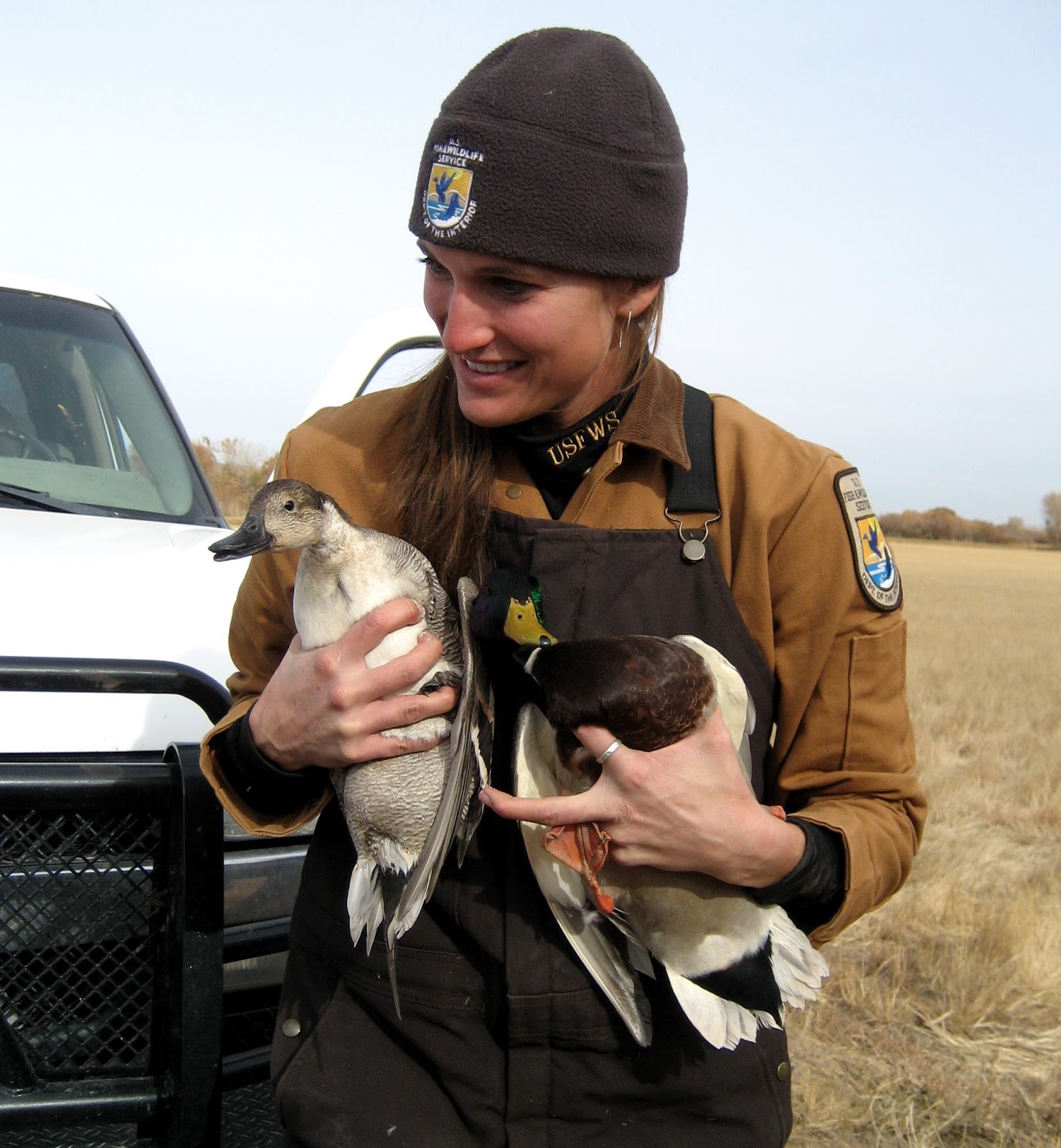
Festival of Cranes, Bosque del Apache, New Mexico

There came a time when everyone had to release their ducks.


And we were finished. I think everyone loved being part of this event.


Up next: Raptors, wolves, and snakes


Friday, November 16, 2012

Ethiopia: Traditional Dance - Amhara

Friday - dance time!

Over a year ago, not too long after I'd returned from my solo trip to Ethiopia, I had a Friday dance series showcasing the traditional dances of Ethiopian ethnic groups.  

There was dance from the Oromo, and before that, dance from the Gurage.

In my "draft post" closet, I've had this post gathering dust, til now.

Today, traditional dance from another Ethiopian ethnic group, the Amhara.


In addition to the dancing in the above video, I enjoy the periodic appearances by a cow or a guy on a horse.  

When resurrecting this post, I had fun looking at the Oromo and Gurage dance videos again. I love all Ethiopian dance, but I think the Gurage's is my favorite.

Thursday, November 15, 2012

The 5 Laws of Souvenirs

Credit: Mount Rushmore

If you fall into any of these categories, then this post is not for you:
 
  • You love to shop! 
  • It makes you happy to be surrounded by items you've collected from your travels.
  • You adore giving gifts! 

You already know what you're doing and are having a good time doing it. Carry on. 


No, this post is for people who:

  • Don't really enjoy shopping
  • Often seem to buy the wrong souvenirs
  • Feel anxious about which souvenirs to buy for folks back home  
  • Feel like you "should" buy a souvenir, but really don't want to collect any more stuff


First Law: You don't have to buy any souvenirs


Freeing yourself of souvenir-buying saves you:
  1. Time shopping, which you can spend on more pleasant pursuits.
  2. Money that you can apply toward a longer stay, a lodging upgrade, additional stops, more activities on your trip ... or keep safe in your savings account. 
  3. Luggage bloat that is inconvenient and perhaps costly.
  4. Guilt that you aren't doing something you think you should be doing while traveling.
  5. From having to apply a work attitude while on vacation, toward the goal of souvenir purchase.

Freeing yourself of the chore of buying souvenirs allows you to enjoy sensory-dazzling markets without a care, merely offering gracious "no thank you's" to vendors. You can devote your experience to taking in the sights and smells and sounds. Taking photos. Touching the wares. Or, get this: You don't have to visit a market at all, if you don't want.

If you happen to see something you must have, great! That is serendipitous and adds to the travel experience in a positive way. 


Second Law: Remember the light at home.

What looks stunning and exotic and perfect! on your trip may look out of place at home.

This applies especially to artwork, and it especially applies to situations where you've bought an item in a sun-drenched location and brought it back home to, say, the Midwest, New England, or the Northwest, where the light is so completely different.

The color palette of a painting that looked smashing on your trip might not make sense in your house. It might not work with your existing decor, or your light does not support the wonderful energy you saw in the painting when it was in its original environment.

Sometimes it's best to just appreciate a work of art in the moment and in its original context, and leave it there. If you wish, take a photo of it, if the vendor allows, so you can revisit the piece in an album as often as you wish.

This rule also applies to clothing. As beautiful as that scarf, shawl, harem pants, caftan, or traditional hat is ... will you (or your unsuspecting recipient) actually wear it back home?

On my first trip to Ethiopia in 2006, I bought several gorgeous (gorgeous!) shawls of the most brilliant hues and designs. But what I found upon returning home was that I never quite found the right opportunity to wear them, or even the knack to wearing them in a way that felt comfortable to me. I brought back a number of scarves for gifts, but as beautiful as they were, the recipients didn't wear them.

Here are some helpful questions to ask yourself before buying a souvenir:
  • Will I (or the recipient) really wear this at home? When? Where? With what? 
  • Where will I (or the recipient) display this in the house? Will the colors work with the light and decor? Is its size the right scale for the room?

Another technique I've found useful is to walk away from the item and continue shopping. If I still want it after I finish perusing the market, then that's a green light. Often, I find that I don't want the item enough to go back and retrieve it, thus saving myself buyer's remorse later.


Third Law: You are a rabbit, the vendor is a hawk. Never forget that. 

Rabbits and hawks are both worthy creatures, but each has its own agenda.

The hawk's agenda is to separate you from as much of your money as possible. Your agenda, as the rabbit, is to enjoy the day and get home with your hide intact.

Do not feel sorry for the vendor or worry that you might take advantage of the vendor. [Insert uproarious laughter here.] Regardless of the vendor's age or gender, trust that the vendor is a master hunter and you are the game.

When you forget this rule, you may:
  • Buy souvenirs you don't really want
  • Pay more for souvenirs than you want to pay
  • Feel bad about your buying experience

If you don't want to buy anything: 
  • Don't make eye contact with vendors unless you want to engage in a conversation
  • Don't answer questions unless you want to engage in a conversation 
  • Don't shake hands unless you want to engage in a conversation
  • Say "no, thank you" and repeat as needed if you're looking at a vendor's wares. If you're just walking through, then keep on moving.


If you're interested in an item:
  • In cases where your travel location is famous for certain items, such as precious metals or stones, or textiles, or whatever, do some research before you go to the market. Know, in general, what to look for in quality, price, plus any common scams.
  • In a market where haggling is the norm, a rule of thumb is to offer half the vendor's asking price and go from there. But do some research about what the bargaining norms are for the country you'll be in. Asking a clerk at your place of lodging is a good strategy.
  • Have a limit on what you're willing to pay for an item and stick to it. 


Fourth Law: Think Ahead


If you want to get souvenirs, then before you leave on your trip, think ahead: 
  1. Who do I want to buy souvenirs for (including myself)? 
  2. What artwork will complement my house vis a vis color, size, style?
  3. What is my souvenir budget (total, per person, per category of recipient - such as family, friends, work)?
  4. What do my gift recipients like? What are their interests? What do they wear? Do they have pierced ears? What size clothing do they wear? 
  5. Would any of my prospective recipients, truthfully, really prefer nothing, as they don't want to add to the stuff they already own? 
Write this stuff down and take the list with you. Use the list as a daily prompt to help you keep an eye out for items as you enjoy your day.


Making such a list will help you avoid situations where you: 
  • Just buy "stuff" in quantity and assume you'll figure out who to give it to when you get home
  • Forget to buy a souvenir for an individual you want to give something to
  • Are in a last-day panic of "I've got to go buy souvenirs today or else ...!" 
  • Buy things you really don't want
  • Spend more than you want


Fifth Law: Check the Bottom


I'm not going to mention names, but I still shake my head over the gift a friend gave me upon his return from a certain country far, far away. It was a wooden carving representing a figure from that country. When I turned it over, I saw a sticker, Made in China.

Helloooooo?!

[If you're going to buy something "local," but see that it was made in China, then at least take the sticker off. ;).]

Wednesday, November 14, 2012

Nothing There Tour #2: Gardabani, Part 2: Men in Black

This is part 2 of a long-overdue There's Nothing There Tour report. I was in Gardabani in spring 2012. Part 1 is here

Men in black and blue, Gardabani, Georgia


Seeing Georgians in black was nothing new, especially in the winter, when it's the preferred color of dress for both men and women.

But on this Novrus Bayrami celebration in Gardabani, it was so concentrated among the men and boys as to be remarkable.

There was live music, with a cool mix of traditional pop-ballad and hiphop.


I listened to the music, then continued to wander among the booths.


I maintained periodic phone contact with TLG colleague, Lauren, who was en route with Eva and Monica to join me in Gardabani for the festival.

Traditional cookware, Gardabani, Georgia


At various booths where I stopped, I enjoyed a bit of wine or chacha, so I began to have a pleasant little buzz.

The Simpsons in Gardabani, Georgia


At a certain point, I had to find a toilet. The city hall was next door to the park, and I was directed to the public loo inside the building. Yes, incredibly, this was it:

City hall toilet, Gardabani, Georgia


People! It does not require much effort or money to clean a toilet! And this is for your constituents! Have some respect. Jeez. It was almost as bad as the toilet situation I encountered in Ethiopia, between Harar and Nazret, only that latrine hellhole was darker and wetter.

Getting back to the festival .... the official musical line-up ended, and now the boys put on an impromptu dance showdown.

Now, look at this first video. It's only 27 seconds long. I want you to note the tall guy in the back. He's wearing a stocking cap with FBI on the front. His name is Romeo, but I didn't find that out til later. Foreshadowing.


Now look at this video, where the boys really get into the competitive spirit.


It was so fun watching the guys dance.

And then the festival was over for real, and my colleagues were almost at the park, but not quite. I felt disappointed they missed the festival, but .....

I found myself talking to an Azeri-Georgian gentleman with the help of an Azeri visitor who spoke English. Young Romeo appeared, as well, listening to the conversation. 

The Azeri-Georgian man, perhaps in his 60s, was inviting me to come to his house ..... and then my colleagues arrived.


To be continued ....


Tuesday, November 13, 2012

Nothing There Tour #2: Gardabani, Part 1: Town of Surprises

Gardabani, Georgia. Dancers waiting.

Sadly, my experiences in Gardabani, Georgia, in spring 2012 are only now being brought to life in the written form. I smile every time I think of Gardabani.


In Nothing There Tour #1, I told you about Vakhtangisi, which is on the Georgia-Azerbaijan border. In that report, I explained how Georgians wondered why anyone would go to Gardabani because "therrre's nothing therrrre!"


Now I've gone twice to Gardabani!

Some highlights:
  • Something called "kubdari," which is a tasty meat pie - a small pizza with a lid, say
  • A surprise supra with strangers
  • A good white wine made by an Azeri-Georgian
  • Men in black
  • Georgian rap
  • Filthy WC
  • Chickens having sex
  • Horses running down the street

What do you mean nothing is there?!  

Gardabani, Georgia. Restaurant door.
The first time

The first time I went to Gardabani was with Sandy; we stopped on our way back from Vakhtangisi. Had lunch at the restaurant next to the Orthodox church. Like so many Georgian restaurants, it had a fine door.

Georgian servers are also skilled at upselling their products, and we ended up with far too much food on the table. In addition to a tomato-cucumber-parsley-onion salad, we had a khachapuri and kubdari, a sort of meat pizza pie. Delicious. Most of the stuff we carried out with us to take back home to Rustavi. 

A Georgian restaurant tradition I like is the prevalence of "kupays"in most places. They are private rooms or alcoves. They let you escape from the noise and smoke of the larger dining room.

Another Georgian custom I like is that when there's live music, the band plays one song, then takes a break instead of the one-hour or half-hour sets in the U.S. One song, then break. The Georgian way is the perfect win - you can listen to the music, dance, and also talk to your companions throughout the evening.

When we emerged from the restaurant, we walked across the main drag to find a marshrutka. In the yard of some official building, we saw chickens engaged in digging a hole in the ground. Or maybe just laying eggs in an existing hole. Kind of interesting, what those hens were doing getting in and out of that hole in the ground. Then we saw the rooster come over and, well ... it was over very quickly.

We caught a marshrutka and returned to Rustavi with our culinary riches.

The second time - Bayrami!

Before we left Vakhtangisi, we learned from the English teacher, Nata, that there'd be a large Bayrami celebration in Gardabani the following week. Sandy couldn't go, but I was happy to be able to make it. I also let other TLGers know about it.

On an April Thursday mid-day, I got into Marshrutka #13 at the Old Bazaar in Old Rustavi and began the short trip to Gardabani. When we began, there were only an elderly woman and man on board, plus me. As we neared Gardabani, however, clutches of young girls boarded, giggling as girls do. Soon, the marshrutka was packed with tween girls. Some boys got on. Some men and women. By the time we rolled into Gardabani proper, the marshrutka was so tightly packed with humanity, individual bodies coalesced into one organ with multiple appendages that had limited range of movement.


The event was held in a park next to Gardabani's city hall ("meria"). There was a large stage for bands and dancers. Representatives from nearby villages had set up feast tables to show off their food and drink. (Though most Azeri-Georgians are Muslim, not all follow the proscription against alcohol consumption.)

Gardabani, Georgia


I saw several Bayrami maidens, bedecked with flowery headdresses, carrying the traditional fruit and new grass, to the village tables. Sometimes a band of music men accompanied them.

Men boiled khinkali.

Gardabani, Georgia


Politicos visited. 


Men gave speeches.


Men ate.
 

Gardabani, Georgia

Gardabani, Georgia


Tea was made.

Gardabani, Georgia


I saw the director of Nata's Vakhtangisi school - that village was represented today also. I was invited to partake of its table's contents, including wine. All delicious.

There was music on the large stage - dances and concerts!

To be continued ... 


Monday, November 12, 2012

White Sands National Monument, NM: Dunes at Dawn

White Sands, New Mexico - "Dunes at Dawn"


During part of the year, White Sands National Monument offers a naturalist tour once a month, early in the morning, called Dunes at Dawn. The guided tour follows the Dune Life Nature Trail, which is about one mile. There are informative signs all along the way.

The "dawn" part is a bit of a misnomer, depending on the time of year, but it's close enough, I guess, and it makes the title alliterative.

There's a reservation form to complete and submit in order to get a slot on the tour, which sometimes maxes out at the 40-person capacity very quickly. I submitted my reservation within minutes of the form being made available for the November hike. (Now, don't tell anyone, but here's the hack: I think you could just show up and be good to go. After all, the guided tour follows a self-guiding trail, and the registered tour participants don't get into the park any earlier than the regular 7:00 a.m. opening time. The naturalist didn't check names, either.)

My tour aperitif

I left my apartment at about 6:15; it was already pretty light out. But when I turned south onto White Sands Boulevard, I turned my head to the east, toward the mountains, and I gasped.

Alamogordo sunrise, White Sands Boulevard, New Mexico

The fiery sunrise coming over the mountaintop was explosive. I took the above photo while driving (but looking at the road, of course!), so it's a little blurry.

Here's a video I took of the sunrise:


(Note: The wind sound was irritating. I experimented with youtube's audio swap, editing in a song instead of the wind. In fact, I was listening to Cat Stevens' Moonshadow while I took the video, but this wasn't available.  Oh, and the trade-off for using youtube's music? An ad. In this case, the video's original wind noise is more intrusive than the ad.


The Dunes at Dawn tour in photos

A slide show of the Dunes at Dawn tour, in which I include some of the photos I took in 2010 on a previous road trip, and some photos on the day I arrived in Alamogordo in September:


Some tour tapas

Great Horned Owl

The Great Horned Owl is at the top of the White Sands food chain, from the air. From the ground, it's the coyote.

Roadrunner

The roadrunner is no slouch as a predator. Incredibly, when it has a taste for a sunbasking snake, the roadrunner will build an interlocked corral around the snake with cactus bits, then it will toss bits of twigs at the snake to wake it up and annoy it. When sufficiently riled, the snake will attempt to leave its cozy sunbathing spot, but impale itself on the interlocked corral. To kill the snake, the roadrunner holds it in its mouth and bangs its head repeatedly on the ground.

I don't know if I'm buying the corral-building bit, but here's a video of the headbanging technique:


The water table is very high underneath White Sands - you only have to dig down about 18 inches to get to wet sand. 

There are cottonwoods on the dunes. This time of year, their foliage is yellow. Some of them are shrub height - you think - but in fact, their trunks may be submerged in the dune 20 or 30 feet! These are thirsty trees (they often comprise the bosques in the Southwest), so they pursue the underground water.

Here's a great reader-friendly resource about the geology of White Sands: Geological Overview of White Sands National Monument.


Here's a very noisy video of some of my time on the dunes. The wind was intense.


I look forward to going on one of the daily White Sands Sunset Strolls.

By the way, per the naturalist, every last one of the oryx is gone from White Sands National Monument.


Sunday, November 11, 2012

Istanbul: Flashback Photo

Trabzon Restaurant, Istanbul, Turkey


From the gutter ledge by my go-to restaurant, the Trabzon.


Saturday, November 10, 2012

New Mexico: Architecture 1: Alamogordo: Azotea

North-facing, Azotea Apts, Alamogordo, New Mexico


Back here, I said I wanted to get an understanding of how New Mexican architecture does and doesn't work with its climate for comfort and economy. I'm using "economy" in its broadest sense, encompassing financial and environmental costs/benefits.

West-facing, Azotea Apts, Alamogordo, New Mexico


I revisited the Azotea apartment complex on First Street in Alamogordo so I could get a better look at the design, the residents' outdoor space, the landscaping, and how it all interacts with the sun.

North-facing, Azotea Apts, Alamogordo, New Mexico


Aesthetically, I'm really taken with Azotea. I love the soft sage-y green color, the mid-century boxiness, how the structures are framed by the mountain range, and to a fair extent, the xeriscaping.

Large windows south-facing, Azotea Apts, Alamogordo, New Mexico


What I like specifically about the landscaping is its scale - it doesn't overpower the buildings and it doesn't compete visually with the mountain backdrop. And it appears that it's low maintenance, with a naturalized look, and, of course, is not too thirsty.

Large windows south-facing, Azotea Apts, Alamogordo, New Mexico


It does look a little raggedy, but I'm assuming this is because of its youth; I expect the landscaping will get better each year as its components mature.


South-facing, Azotea Apts, Alamogordo, New Mexico


What I don't like about Azotea is that so many of these giant picture windows have a southern sun exposure - that must be brutal at the height of the summer, with what appears to be only dated vertical blinds as a protection for the inhabitants inside. Yeah, I get that a southern exposure in temperate climates make a lot of sense, but in the high desert where the summers are so hot and the winters relatively mild? It's a lot easier (and cheaper) to get myself warm in a mild winter than try to cool myself off in a hot summer.   

Common area runs east-west, Azotea Apts, Alamogordo, New Mexico

The buildings that are in the middle of the complex have more protection from the sun, but they pay for that in loss of view.

South-facing, Azotea Apts, Alamogordo, New Mexico


South-facing, Azotea Apts, Alamogordo, New Mexico


Given the developers' aspiration to be green, I'm perplexed by the paucity of shade design. Yes, there is a bit of overhang over the large windows and the doorways, but these are so meager in size. Again, for those south-facing, heat-collecting windows, why not more substantial shade design? 


Finally, what I don't like is the stinginess of the residents' personal outdoor space. Some units seem to have only doll-sized patio slabs, or the bit more roomier front-door entrances. Not getting that.

South-facing, Azotea Apts, Alamogordo, New Mexico
  
What it's inside these units, I don't know. Maybe some day I'll get a look. I'd like to.


South-facing, Azotea Apts, Alamogordo, New Mexico

There are probably some design considerations in Azotea vis a vis the sun that I don't know about. Also, as a shade-lover, I may be more sensitive to the sun thing.  Maybe someone more knowledgeable will comment. 

Overall, I like the cosmetics of Azotea's design. As a passer-by and not a resident. 


Friday, November 9, 2012

Cloudcroft, NM: Karr Canyon and the Mystery of Binoculars 58

Karr  Canyon, near Cloudcroft, New Mexico


AKA: New Mexico: Fall Colors, Part 3


After I emerged victorious from imaginary mountain lion attacks, I made my way back through High Rolls and headed to Cloudcroft proper. 

But almost as soon as I got onto Highway 82, I saw a sign with a graphic of binoculars and the number 58, pointing right.


58 Binoculars

It was a beautiful Sunday afternoon, and why not? So I turned right onto Karr Canyon Road in search of what I presumed to be a scenic viewpoint a few hundred yards away.


The beginning held so much promise, with a spectacular vision of tall columns of leafy sunshine.


And after rounding some pleasant curves, I approached a postcard-beautiful meadow at the foot of the mountains, filled with multi-colored, waving grasses and shrubs in medieval-tapestry colors like claret, champagne, and ivory. Alas, I knew my camera was not going to be able to overcome the still-strong sunlight to recreate how gorgeous this scene was. It's worth returning to this area during a different time of day to try to capture it. In the meantime, this was the best I could do:


But where was this scenic view #58? I pushed on. I seemed to be climbing, and soon I entered a forest. Then yay! Another sign with the binoculars and the 58!

(What was the 58? The name of the road? The mile marker? The 58th scenic view in NM? I didn't know, but I was guessing a mile marker, but weren't the mile markers ascending rather than descending? I didn't know.) 

I kept going, even when the pavement stopped.

The forest pressed in closer. I passed an area with picnic tables and even a vault toilet structure. The road was pretty rough, and I kept climbing.

I saw a trio of deer over on the left, and they bounded away.

Occasionally, sun pushed through the dense canopy and I thought I might be cresting the mountain, where I'd arrive at the view.  But then I'd climb some more.

My wuss side kept talking to me about vehicle breakdowns, heavily-armed mountain-living survivalists, methheads, and I had no whistle to defend myself.

But I kept going.

Until. I realized, no, it was just too late in the day, this first day of not-daylight-savings time. So I turned around and came back, with a plan to find out what this 58 business was so I could visit it another day. I got to see the lovely yellow columns again on my way out.


When I emerged, again unscathed, I took a right onto 82 and decided to look into the Old Apple Barn, a touristy store outside of Cloudcroft.


The Old Apple Barn

The Apple Barn, near Cloudcroft, New Mexico

I went inside the Old Apple Barn, confident that I'd see a lot of uninteresting tourist crap. Well, there was a lot of tourist crap, but most of it was, in fact, interesting. A pleasant surprise. I even found something I'd been looking for: A thing to hold my small purse items to make it easier to change bags - my purse, my backpack, my 'festival' bag. And a postcard.

I coveted some bamboo (?!) plates, but their price made it easier to break loose the hold.

I bought an apple for 40 cents, which I ate on my way back home. It was so tasty. The cashier offered me a free smidge of fudge to take with me, but I virtuously declined the invitation.


Thursday, November 8, 2012

Cloudcroft, NM: Salado Canyon Trail, and a Whistle Killer

Salado Canyon, near Cloudcroft, New Mexico

AKA: New Mexico: Fall Colors, Part 2


Recently, New Mexico's rails-to-trails organization opened a new trail route to Bridal Veil Falls, which is in the Salado Canyon, near Cloudcroft. Truthfully, it's closer to High Rolls, so you can go with that, if you prefer. 

I didn't go there.

But I did take a short walk on the related Salado Canyon trail, to the trestle bridge.

Before that, though, I did a due diligence search for some fall foliage, and I found a little here, at the creek crossing on the road that I have not yet followed to its end.

Salado Canyon, near Cloudcroft, New Mexico

I turned around at the creek and went back to one of the trailhead markers. Got out and almost as soon as I set foot on the trail, proceeded to slip and slide on the loose gravel.  What the heck? So I placed my feet a little more carefully, and all was fine. As I walked, I could just feel myself become lighter, airier, freer. Disney bluebirds were about to flutter into my bucolic bubble. Just as I puckered my lips in preparation for whistling a happy tune, I saw a flash of something unnaturally white in my peripheral vision, to the right.

Salado Canyon Trail, near Cloudcroft, New Mexico


I walked over to investigate.

Bones. A trail of them. Leading to an empty hide, dried and contracted from days of exposure to the sun. A dark brown pelt. Largish.

Mountain lion? Mountain lion?

Trail of bones, Salado Canyon Trail, near Cloudcroft, New Mexico

Carcass that used to cover said bones, Salado Canyon Trail, near Cloudcroft, New Mexico


The Disney bluebirds evaporated in a pouf, as did my whistle of a happy tune. My inner wuss had returned.

My rational mind told me not to be stupid. There wasn't even a sign at the trail head saying to watch out for mountain lions. But my wuss side tried to do numbers on my head.

This didn't keep me from continuing my walk to the trestle bridge, however. The train that used to chug its way through here was the Alamogordo and Sacramento Railway, primarily used to transport lumber from the mountains to the basin below. I'd learned from a museum docent a couple of weeks ago that once trucks were pressed into the lumber-transporting service hereabouts, it was discovered they were more economical than trains, especially since they were able to carry longer logs than the trains. So the train business petered out.  

View from trestle bridge. Salado Canyon Trail, near Cloudcroft, New Mexico


There were quite a lot of large droppings on the trail. Probably horses. I didn't take a picture of the droppings.

It was nice to stand on the trestle and listen to the creek below.


Later, once at home, and having successfully rebuffed all non-existent mountain lion attacks, I thought I'd exercise some cognitive therapy and find out how many mountain lion attacks actually occur in New Mexico. I estimated virtually none.

I didn't want to see this headline right off the bat: New Mexico Man Torn Apart by Mountain Lion.

I found a less salacious source of information here: Mountain Lion Attacks from .... . The author has compiled reports of confirmed (and unconfirmed) attacks for North America, formatted per decade. This link happens to take you to the 2001-2010 page.


Wednesday, November 7, 2012

High-Flyin' Rootlessness

"Hello, Dubai! It's me!"


My mother sent me this Wall Street Journal article in the mail: The Sell-the-House, See-the-World Retirement, by Lynne Martin (one half of the article's subject couple).

The Martins conduct slow travel around the world, staying in one place for about a month at a time. It's a nice way to do things.

And not so different from any traveler who's sold her house and stuff and taken off, comme moi, or a backpacker, or location-independent entrepreneur (including even that subspecies nomadic entrepreneur, the shudder-inducing"lifestyle designer" - never heard of it? just google it), or ESL teacher who relocates every year or two.

We all have the same budget items: lodging, food, entertainment, clothing, transportation, etc.

The difference is primarily in the amount of money we all have to work with. In the Martins' case, they've got $6000 per month (plus their Social Security).

If I were to add anything to the Martins' article in WSJ, I'd say reassuring things to all of the folks in the middle, the people of more modest means who aren't in the Martins' travel stratum, and are uninterested in the backpacker or just-above levels, but who really want to chuck it all and travel full time. 

I'd say, yes, it's doable, and research doesn't cost anything. So why not look into it?

Western Europe is mind-numbingly expensive for a long-term traveler (not to mention the crush of humanity you'll be sharing it with), but there are wondrous alternatives in eastern Europe and the Caucasus, which are just as chockful of history and both manmade and natural beauty, and which are much gentler on the wallet.  

There are less costly, but just as sensory-rich alternatives to most all of the big-ticket travel destinations. Check it out.

Just take a look at this sigh-worthy place on Lake Atitlan in Guatemala - $700 per month (sometimes less!).


Credit: HomeAway


The laborer on the cargo boat at the top of this post? He's seeing the same sights as the tourists - like me - enjoying pricy drinks at the restaurants along Dubai Creek. 


Tuesday, November 6, 2012

Mesilla, New Mexico: Dia de los Muertos

El Dia de los Muertos, Mesilla, New Mexico


Mesilla is a town just outside of Las Cruces, New Mexico.

On Saturday, I turned to Mesilla for celebrating El Dia de los Muertos, held in the old plaza. Technically, it was the "weekend" of the dead; the actual day was on the 2nd.


A funeral, for real

When I arrived at the historic plaza, it was just in time to see motorcyclists outside the Basilica of San Albino, where they awaited the end of a funeral, when they would escort the honored deceased to the cemetery.

El Dia de los Muertos, Mesilla, New Mexico. Basilica of San Albino.

 
Many years ago, when my father's brother-in-law died, the Chattanooga branch of the Bikers for Christ escorted his body to the cemetery.


About El Dia de Los Muertos

El Dia de los Muertos (the Day of the Dead) is a Mexican tradition, if you define Mexican to include its Aztec antecedents.  Over the years, its observance has spread throughout the world.

It'd be easy to confuse it with All Saints Day and All Souls Day, liturgical events for some Christian denominations, but the Day of the Dead stands on its own as a uniquely Mexican tradition.

There is both a somber dimension to the observance and a festival dimension.

I experienced both at the El Dia de Los Muertos in Mesilla.


The altars

Even though the plaza was set up with many vendors selling arts and crafts related to the day of the dead, there were also altars set up, honoring real family, friends (and even beloved pets).

El Dia de los Muertos, Mesilla, New Mexico

El Dia de los Muertos, Mesilla, New Mexico

El Dia de los Muertos, Mesilla, New Mexico


El Dia de los Muertos, Mesilla, New Mexico


El Dia de los Muertos, Mesilla, New Mexico

An especially touching altar was the one made in honor of the women killed in Juarez (population 1.3 million) since the early 1990s. Juarez is in the state of Chihuahua, and in 2010 alone, more than 300 women were killed in Chihuahua (population of 3.2 million). As a point of comparison: in New York City in 2011, there were 515 murders of both men and women. NYC has 8.2 million residents. In 2011, there were up to 2000 homicides in the state of Chihuahua, both men and women.

El Dia de los Muertos, Mesilla, New Mexico

Even though Juarez seems like a world away to most Americans, it's not, really. It's only about an hour and a half away. I'm willing to bet there are Mesilla residents who have lost loved ones by way of these killings. 

Artwork

New Mexico has a real appreciation for creative, beautiful jewelry. Ah, if I had the budget - so many fine earrings, bracelets, rings, and necklaces done up in the skeleton or skull ("calavera") motif, using stones or glass or beads or wood ... I selected a modestly-priced pair of colorful, dangly earrings topped by skulls.

If I had a permanent house, I would have definitely bought one of the tin luminary "bags." And maybe an ornament or two.

El Dia de los Muertos, Mesilla, New Mexico

El Dia de los Muertos, Mesilla, New Mexico

El Dia de los Muertos, Mesilla, New Mexico


The clothing mannequins, cool.

El Dia de los Muertos, Mesilla, New Mexico


There were painted faces.

El Dia de los Muertos, Mesilla, New Mexico


The area around Mesilla's historic plaza has a lot of charm.

Mesilla, New Mexico

Mesilla, New Mexico

Mesilla, New Mexico

Mesilla, New Mexico

Mesilla, New Mexico

Mesilla, New Mexico

Mesilla, New Mexico


As you might guess, I was entranced by the curb appeal of the building with the blue door.

I had lunch at La Posta Restaurant, which I learned later is a locally-famous landmark. You can read my review of the place here.  

El Dia de los Muertos. I like it.
 

A lagniappe: Mesilla Valley Bosque State Park

Before I headed back to Alamogordo (well ...), I checked out Mesilla Valley Bosque State Park. A pretty garden; some pretty facilities.

Mesilla Vally Bosque State Park, Mesilla, New Mexico


I liked the river of grass below.

Mesilla Valley Bosque State Park, Mesilla, New Mexico