Showing posts with label moth. Show all posts

Saturday, March 9, 2019

Las Cruces NM 2019: White Sands: Dead Moth


Dead moth, White Sands, New Mexico. March 2019.


My Las Cruces housemates, Beck and Susie, were my travel companions to White Sands the other day.

Dead moth, White Sands, New Mexico. March 2019.


Susie noticed this exquisite moth, sadly dead. She picked it up, held it for awhile, appreciating its beauty, handed it to me.

Dead moth, White Sands, New Mexico. March 2019.


I admired it, too.

Dead moth, White Sands, New Mexico. March 2019.


I laid it in various spots on the sand, tenderly. 


Dead moth, White Sands, New Mexico. March 2019.

Dead moth, White Sands, New Mexico. March 2019.

Dead moth, White Sands, New Mexico. March 2019.


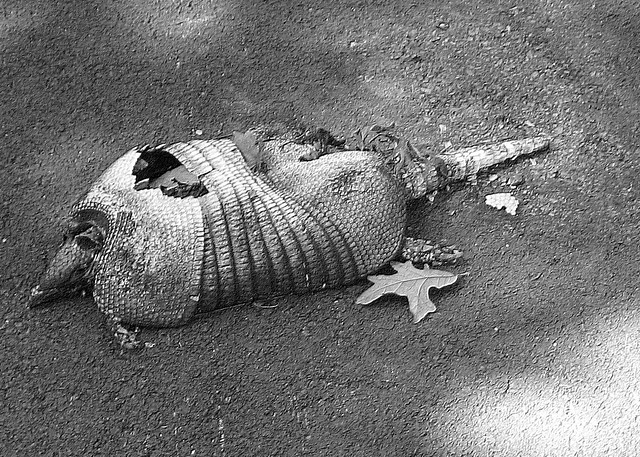
An addition to the carcass collection in the slide show below:

We Stop For Carcasses


Tuesday, August 22, 2017

El Paso: Two Stalkers at a Park


A park stalker, in hiding. Upper Tom Lea Park, El Paso, Texas. August 2017.


August 2017

In late evenings, still daylight, I went to Upper Tom Lea Park to try and capture the resident roadrunner in a photo. That mission failed, but one evening, I did happen upon a lovely butterfly, which I proceeded to stalk, as you can see in this video:


"Stalking" is such a harsh word. Let's call it a patient shadowing of a painted lady butterfly. Should you feel so inclined to skip toward the end, you'll see the beautiful detail of its underwing and fluffy, bird-like head, and long, elegant antennae.

Oh yeah, there were ants, too. And did you notice the big E on the mountain?

Here's a fine photo of a painted lady from someone else:

Painted lady butterfly. Credit: Fir0002/Flagstaffotos

As is always the case at Upper Tom Lea Park, there were other things to see, too. Knowing I'd have to say goodbye to one of my favorite El Paso spots soon, I took a couple of pictures of the views looking north instead of my usual south.

Upper Tom Lea Park, El Paso, Texas. August 2017.

Upper Tom Lea Park, El Paso, Texas. August 2017.


Turning south again, I saw that El Paso High School had repainted its athletic field for the coming school year.

View of El Paso High School from Upper Tom Lea Park, El Paso, Texas. August 2017.

View of El Paso High School from Upper Tom Lea Park, El Paso, Texas. August 2017.


And a loving so-long to El Paso's downtown skyline, the Mexican Red X, stacking clouds, and the wide, flat basin that holds millions of families in the sister cities:


View from Upper Tom Lea Park, El Paso, Texas. August 2017.

View from Upper Tom Lea Park, El Paso, Texas. August 2017.

View from Upper Tom Lea Park, El Paso, Texas. August 2017.


And, oh yes. A second photo of the other patient shadower in the park:

Upper Tom Lea Park, El Paso, Texas. August 2017.


Friday, July 1, 2016

Antigua, Guatemala: A Moth

Rustic sphinx moth, Antigua, Guatemala. April 2016.


I was walking to Spanish class one morning, maybe, when I saw this moth on the sidewalk.

No, I didn't add it to my carcass gallery. Because I'm pretty sure it was alive.

A large moth. Best I can tell, it's a rustic sphinx moth.

Oh, I've met his cousins before.

My introduction to his family was on the back deck of my house, back when I had one. I blithely sauntered over to one of my potted plants one day, and saw this, this, this CREATURE from another galaxy, or maybe from a 1950s secret radiation experiment facility, or I don't know what, but it was jolly fucking GREEN and HUGE and MOVING.

I called my friend to come over immediately to look at this thing and to DO SOMETHING about it.

That's when I learned about the caterpillar youth of sphinx moths. Holy Christ.

A sphinx moth caterpillar. Credit: What's That Bug?


Later, I met a white-lined sphinx moth in Alamogordo, right outside my front door.

White-lined sphinx moth, Alamogordo, New Mexico.


And then, later, seeing a hummingbird moth (also of the sphinx family) at Bandelier National Monument.

Humming bird moth (aka sphinx moth), Bandelier National Monument, New Mexico.


These moths fall into that category of living things which have an awful/awe-ful beauty.


Wednesday, September 11, 2013

Bandelier National Monument, New Mexico: A Couple of Really Cool Things

Bandelier National Monument, New Mexico


When my daughter was three or so, I took her to the St. Louis Zoo for the first time. I was pretty excited about this, envisioning how enchanted she'd be by the petting zoo, the exotic animals, the intoxicating smells and sounds. But no, none of that fascinated her nearly as much as the tiny pebbles on the ground of the petting zoo, which she picked up and placed in the pockets of her green trousers.

I've had experiences like that myself, and one of them was Bandelier National Monument. There are many who wax poetic about this national treasure, and I completely support them in their rhapsodies.

But when I visited Bandelier recently, my head was turned by two things I never heard mentioned. 

Pleasing fungus beetle

Bandelier National Monument, New Mexico


It didn't matter that I never saw the actual thing. The sign was sufficient.  It is just too good to be true that there is a living creature with these three words in its name. Even when I play with only two of the three words, I experience cognitive dissonance: pleasing fungus? fungus beetle? pleasing beetle? But putting all three together is just over the top.

In the picture, it does look kind of cute. Kind of .... pleasing.


Hummingbird moths

As I walked on the path to the Pueblo ruins where the petroglyphs are, movement on the side of the path drew my eye. Looked like hummingbirds at first, but too small. There were the prettiest pink bands on their bodies. Hummingbird moths.

I took a couple of movies, but this one below from loreecew is much better:


I did get a still photo - can you see the moth?

Hummingbird moth, Bandelier National Monument, New Mexico

These hummingbird moths are the coolest things. Of course, when they're in their caterpillar stage, they freak me out completely. Too big, too green, too, too, too.

One of my friends, upon learning I was going to Bandelier, asked me to send her some photos because she really loves the place. I'm not sure I've got the photos she had in mind. 


Friday, August 23, 2013

Las Cruces, New Mexico: Arthropod Museum


Beetle, Arthropod Museum, Las Cruces, New Mexico


Joshua, a Living Rootless reader, recommended that I visit the Arthropod Museum on the New Mexico State University campus in Las Cruces.

I did and it exceeded my expectations.

When I walked in, I expected the museum to be museum-ish, with display cases and museum lighting, but in reality, it is a room with wooden cabinets, and when you open the cabinet doors there are wooden drawers with glass tops, and inside these are the insects.

There are also some live specimens, which are kept variously in small aquaria or plastic Gladware containers.

Giant African millipede, Arthropod Museum, Las Cruces, New Mexico


Graeme is the curator of the museum. Also present on the day I visited were staffers Ryan and Randall. All three educated and entertained me.

Madagascar roach

There were a couple of live Madagascar hissing roaches and Graeme was willing for me to hold one in my hands. I wanted to be willing, but I couldn't guarantee that once it was placed in my hand, I wouldn't immediately fling it across the room in squealy fear. Ryan had the good idea for me to place my hand on the table and let the roach creep crawl walk on it. I did do this, all the while giggling in the way one does when one is actually scared and not amused.

Madagascar hissing roach, Arthropod Museum, Las Cruces, New Mexico


I also touched the roach's back while Grame held it, even though it took a few tries for me to get my finger to actually make contact.

Giant African millipede

I could have done Ryan's trick again with the giant African millipede, but I couldn't abide the thought of those hundreds of tiny feet crawling on my skin. I am grimacing now just writing about it.  Ew.

Giant African millipede, Arthropod Museum, Las Cruces, New Mexico


Graeme telling me that millipedes excrete a toxic ooze didn't encourage me, either. But I did feel OK about touching the back of the millipede while he held it.

 Red ants

It happens that Ryan is an ant expert, and I asked him about fire ants in New Mexico and about the tiny red ants that manage a super-highway of traffic in front of my apartment. I don't remember which ant I have, but it's not fire ants. Ryan told me that if I were to squash some of the ants, and then smell them, I'd detect a lemon-lime aroma.

There are fire ants in New Mexico, but they're different than the more aggressive and invasive fire ants (RIFA - red invasive fire ants) we hear about in the media, which are migrating north from South America.


Scariest arthropods

I asked the guys what they thought were the scariest arthropods.

Graeme put forth the bot fly, which, through various vectors, implants eggs just beneath a host's skin, and they grow and .... you can actually see these things moving just under your skin and .... ewwwwwww. Graeme actually experienced being infected by a bot fly.

Randall noted that he was creeped out by a long-ago donation from an unknown person who had pubic lice. Yes, said pubic lice are at the museum. He showed me some really scary disgusting long worm things floating in formaldehyde from the sea that are kind of in the shrimp family, but aren't shrimp like we think of shrimp.

Ryan noted that "mosquitoes have killed more humans than any other animal." And then he later modified that to say, "It's not even the mosquito, it's what's in the mosquito" [that kills us]. That is, the parasites that have hijacked the mosquitoes. Parasites carried by mosquitoes cause, among other things:

Malaria
Dengue fever
Yellow fever
Japanese encephalitis


If you want to be freaked out some more, check this out: The 5 Most Horrifying Bugs in the World.


Hummingbird-like moth with very long tongue, Arthropod Museum, Las Cruces, New Mexico


Insects in war

Randall's first area of study was history, and when I asked him for any connection between history and insects, he mentioned that in the Civil War, the north used insects to destroy crops in the South. In looking into this further, it seems this story may be apocryphal, but nevertheless, it opened up our conversation into a whole new avenue re: insects.

The Japanese, in the 1930s and 1940s, waged an egregious "study" of entomological warfare, and used their Holocaust-like research to kill an estimated half million Chinese via the deposit of cholera-infected fleas.  This was the doing of  Unit 731, which executed a monstrous project.   

Indeed, insects (in addition to parasites, viruses, et al) have been used for millennia as a tool against enemies. This doesn't count the myriad ways insects have plagued soldiers as a byproduct of war. (Getting back to the Civil War, there is a thought that insect-borne disease killed more soldiers than battle wounds.) In addition to the aforementioned mosquitoes as death carriers, flies and fleas also wreaked havoc on soldiers' health.    

There's a book the three gentlemen referred me to - Bugs in the System: Insects and Their Impact on Human Affairs, by May Berenbaum (who has a connection with the X Files). Unfortunately, this isn't in my current or future local library, so I've bought it online and await its surprises.


Vinegaroon, Arthropod Museum, Las Cruces, New Mexico


Can insects make us zombies?

Maybe, kind of, and we kicked that around for awhile, conjecturing (well, I was) on whether or not we humans might be susceptible to such zombification by tiny critters. .... Last year, I had read this provocative article, about how some of us are infected with a parasite found in cat feces, which can affect our mental processes and behaviors.   

Here's how one parasite takes over the brains of ants to ensure its propagation.

And there's more!


...well, there was more interesting stuff we talked about, and I could have stayed at the Arthropod Museum all day just picking these guys' brains like a parasite, but I tore myself away.


Tuesday, March 26, 2013

Alamogordo: Sphinx Moth

White-lined sphinx moth, Alamogordo, New Mexico.


A white-lined sphinx moth outside my front door the other day. AKA hummingbird moth.

In fact, I saw one of these in Missouri one year; it liked to check out the flowers on my deck. And it did seem like a hummingbird.

Indeed, in Missouri on that same deck, I saw the caterpillar version, though I didn't know it at the time  - huge, fat, long, a vivid green - that scared the bejesus out of me when I first spied it on one of my plants. I was so stupefied (no exaggeration) I called a friend to come to my house to take a look.

Holy Mother of God, look for yourself:

White-line sphinx caterpillar. Credit: What's That Bug