Friday, May 20, 2016

Antigua, Guatemala: The Sunday Blues


Closed market stall across from San Felipe de Jesus church, near Antigua, Guatemala. April 2016.


I heard about a local church that drew many, many folks from the countryside for the first Mass of each Sunday. This same church was allegedly the home of some miracles.

Obviously, I had to check it out. I like to go to places of miracles.

Like the Santuario de Chimayo in New Mexico, where I gathered up some holy dirt and placed it in empty receptacles of some sort that I had in the car, and which I later gifted to my mother and, I believe, re-gifted to my Georgian hostess, Neli, after I discovered my mother did not have the full appreciation for such things like Neli did:
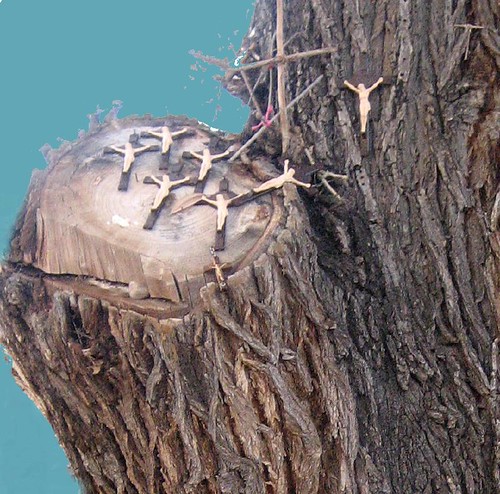
Santuario de Chimayo


And the Holy Tree in Opelousas, from which I harvested a holy stick:
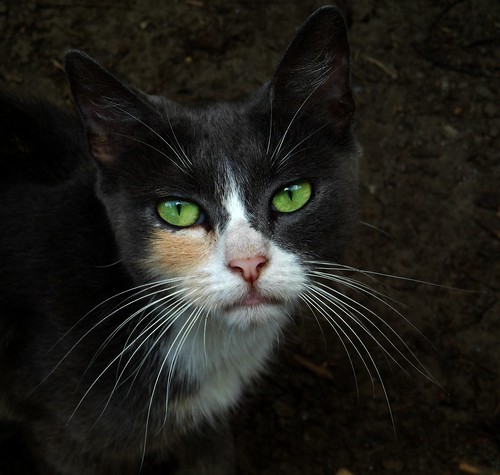

Holy Tree of Opelousas


But back to Antigua.

Although sleeping in on the chosen Sunday morning was inviting, I got up early so I could walk to the bus terminal, find the bus to the village, and arrive in time for the early-morning Mass.

My intel was that I'd find the right bus behind the municipal market down this lane and over by this other place. I went to where I thought it was. No buses yet. Upon asking someone, I learned the first bus wouldn't depart til too late. So I grabbed a tuk-tuk, paid too much (though negotiated it down), and was dropped in front of the church doorway.

Well, I was damn early. But I did see the makings of a post-Mass breakfast at various stations in the area next to the church, plus the stirrings of a Sunday market across the street from the church.

Truth be told, the church wasn't all that memorable for me. It was yellow. Which makes it just like all the other churches in and around Antigua.

Ooh, but the blues of the market across the way! The blue of the tortillas! Seas, skies, pools, precious stones of myriad blues!

Closed market stall across from San Felipe de Jesus church, near Antigua, Guatemala. April 2016.


Blue tortillas in San Felipe de Jesus, outside Antigua, Guatemala. April 2016.


My blue breakfast, San Felipe de Jesus, near Antigua, Guatemala. April 2016.

I've got to learn to ask folks to just leave off the various sauces from the main dishes. The red sauce added nothing to the meat. Alas.

The blue masa from which the blue tortillas are made. San Felipe de Jesus, near Antigua, Guatemala. April 2016.

OK, OK, here's a photo of the church - but through the veils of blue tarps:

San Felipe de Jesus church, near Antigua, Guatemala. April 2016.


Wednesday, May 18, 2016

Guatemala: Dark Windows


Blue Car on Ware Street. Missouri.


My airbnb hostess and her daughter drove me to the airport in Guatemala City for my return trip to Missouri. An unexpected and gratefully appreciated kindness!

As we entered the city, I remarked on the number of vehicles with dark-tinted windows.

Ah, my hostess replied, this is for the security of the driver and passengers. Violent carjacking had become so common that drivers began routinely to have their windows tinted. This is to prevent potential attackers from seeing the gender or age of the driver or passengers and how many people are in the vehicle.

Attackers who operate from vehicles also use tinted windows.

Here is a sobering article about getting around in Guatemala (especially the city) from the US Department of States, Overseas Security Advisory Council.

Adventure of Driving in Guatemala notes the downside of driving with tinted windows.

Tinted Windows offers another view. (Get it?)


Monday, May 16, 2016

Antigua, Guatemala: Good Signage


I notice good signage.

I was so pleased to see two examples of signage excellence.

To wit:

Bathroom signage in Antigua, Guatemala. April 2016.


Bathroom signage in Antigua, Guatemala. April 2016.


So clear. So simple.


Friday, May 13, 2016

Antigua, Guatemala: Additions to the Carcass Gallery


Verily, I confess that I collect carcasses. Pictorially, that is.

So it was that when I encountered a wee lil' possum (or large rat?) and a baby chick, both of which had departed to their heavenly rewards, I took a photo.


Is this a baby possum? Or a rat? I was, and still am, fascinated at how cleanly picked its torso is. What critter could have made such a tidy meal of this little one?

Dead baby possum? Or rat? Antigua, Guatemala. April 2016.


A baby bird:

Dead baby bird. Antigua, Guatemala. April 2016.


My Spanish teacher told me she knows of people who collect road kill. That's their thing. I don't remember if they eat it or skin it and display the pelt or what. My Spanish teacher and I talked of many odd things.

The up-to-date carcass gallery here:


We Stop For Carcasses


Wednesday, May 11, 2016

Antigua, Guatemala: Eating a Mango Like a Lady


Mangoes. Credit: Will Salter/Getty Images/Lonely Planet Images via The Guardian

Today we talk about eating a mango like a lady.


But first: I never talk about mangoes without pointing to these beautiful essay on mangoes, written by Ngishili, a Kenyan author of a dormant website called Cock and Bull Stories.

The Mango Season, by Ngishili 


March 10, 2011. The mango season has come to an end once again. Just a few weeks ago, you would be greeted by women with large yellow mounds of huge succulent mangoes in the market place, but now that the season is over, we have to wait until next year to see all that again.

The mango season starts at the beginning of the year, peaks in mid February and is over by mid March. The season corresponds to the hottest months of the year when temperatures are well over 30 degrees centigrade, and you can imagine how fulfilling it is to take a bite off a thick slice of mango, or to drink from a tall cold glass of thick juice when one is hot and thirsty or after a nice meal.

Back in the village, there would be hundreds of ripe mangoes scattered under the many mango trees that dot the farms. There would be nothing as refreshing as sitting under the shade of a mango tree on a February afternoon and eat one mango after another, until the stomach was so full that when one moved, it made a swashing liquid sound; similar to that made by water inside a metal container on the back of a woman as she laboriously climbed a hill as she came from the stream to fetch the family’s water supply for the evening.

And the chickens would have a field day too. In their quest to search for food, they would bore into the overripe mangoes with their beaks in order to search for worms. After a few days of such activity, they all would have weird shaped beaks. The reason is because the sticky mango juice on the beaks would form perfect glue for mud to cake along the length of the beak. So all the chickens ended up with filthy beaks that had bulbous brown extensions of all shapes and sizes. And as they walked in an awkward gait – perhaps with stomachs making liquid sounds – it all seemed funny and life was light hearted even when the weather was in its harshest.

In the city, I try to remember those moments each time I cut open a mango and its unmistakable aroma fills the room. And it often leaves me with a sense of wonder, at just what it takes to bring a single mango into being. And my mind goes back to the flowering of the mango trees in September, and I remember how vulnerable the little blooms are in the wind. And how in a single violent shake of the trees by an unexpected gust, most of the flowers will be blown off and half the mango crop will be lost in a single moment. But by December, the mangoes have formed and have fleshed out so much that every night, we would hear the sound of branches breaking off noisily from the trees under the unbearable weight of the mangoes. And in a few weeks, the first ripe mangoes would begin to fall from the trees. And in a few more, the mangoes would be so ripe, that one could make a small hole and suck the juice right off the fruit like a thirsty mango nectar vampire, and then disdainfully throw away the deflated lifeless shell for the cows and goats to eat.

During the mango season I think about God. I put myself in His place and I think about how it would please me to see the spectacle of the abundance of mango in the village. And how it would make me feel good inside each time a person enjoyed the taste of mango. It reminds me of a time I fell out with a friend, and then I met her years later and she was wearing a necklace I had given her as a present. It made me feel very good and I forgot about all the acrimony we previously had. Or imagine what it makes you feel when someone flaunts a present that you gave them? What if it was something that you made for them with your own hands?

And so I think that God enjoys it as much – or even more – when we enjoy the gifts that He has given us. And perhaps our enjoying the gifts that we have been given is a very high act of Glorification. So, let us enjoy all our gifts – our children, our health, our friends, our talents – and not forgetting mangoes and all other fruits.


Season of Ripe Mangoes, by Ngishili

January 28, 2007. Today is sunny and I am looking out into the greenness of the fields all around. It is a very beautiful day with the perfect blend for a Sunday mid morning: an azure blue sky with tufty white clouds, noisy birds and flirty butterflies, amplified fervent prayers from a gospel church at a distance competing with the harmonious choir singing from the Catholic Church in my neighborhood.

And I am just here breathing the sweet air. If this day’s oxygen were a drink, it would be served as a brightly colored tropical cocktail with two olives, a tiny umbrella and a fancy pair of drinking straws. It might as well be, considering that taking a deep breathe leaves one heady; at the brink of being intoxicated. But all I can think about is mangoes. I know that the mango trees are laden with fruit at this time of year. The mangoes are still green and will be ripening en mass in a few short weeks. At that time, every mango tree will litter the ground with yellow ready fruit, with such mischief that it would be impossible to walk past the tree without being dunked on the top of your head.

But already, curious boys are up the trees hunting for ripe mangoes with a monkey’s dexterity. They move deftly from branch to branch squeezing the fruits between their fingers for any sign of softness. The softness of the fruit under pressure indicates that the mango has eventually transformed from a green hard sour fleshy orb into a succulent tangle of fiber that holds together the sweet smelling juice of a ripe mango. However, the boys have to be careful so as not to come down with any of the branches. For the mango tree’s branches are not bendy at all. They snap as easily as a long, thin, fresh carrot. When put under unbearable weight, the branch will separate from the tree with a sharp unexpected crackle and noisily splash its burden on the ground. The noisy come-down results from thousands of claps of stiff leaves as they bounce against each other upon the unexpected jolt. For a moment, it is almost as if the branch applauds the downfall of another impatient boy who does not have the courtesy to wait for nature to take its full course.

But most likely, the mango tree’s branches are breaking due to the weight of the mango fruit. It is amazing how suddenly a branch can come tumbling down, spewing hundreds of green mangoes all over the ground. The bigger mangoes simply burst on impact before going into a lopsided spin while the smaller ones bounce and then roll smoothly for a while before coming to a stop. And in a very short while, all is quite, as if nothing ever happened.

The ripe mangoes are available for about 1 month. In that time all sorts of creatures that eat fruit will dig into the feast. It might be confusing to find non vegetarian creatures tearing the mangoes apart, but they would only be searching for insects that have bored themselves into the fruit. Apart from that, almost everyone’s hands are sticky from the mango juice and it takes an exceptionally tidy person not to have a yellow stain even on a Sunday best dress. But no one really minds since this season only comes once a year.


And next I must share my memory of mangoes in Ethiopia: 

The day when I went to the camel market in Babile:  ... Back in Harar, I sought out a woman vendor who'd gifted me two bananas in the morning. She and I had exchanged friendly shouts of "faranjo!" and "habesha!" along with smiling, Ethiopian chin-and-brow lifts. I bought a kilo of mangoes from her, then distributed most of them among the hotel guards and other hotel staff at the entrance, then ate the rest for my lunch. Juicy.

Gosh, those were good mangoes! Gosh, I loved Harar, that crazy place.


From Day 6 in Nazret, Ethiopia, while volunteering at the English Alive Academy: For dessert tonight, Azeb had bought a mango for us to share. Interesting about mangoes: the mango juice I've had in Ethiopia has been delectable - thick and luscious. When I've tried mango in the U.S. a couple of times, I found the texture and flavor completely distasteful. The mango Azeb bought - wow. Had a hint of coconut in the flavor plus the slightest sense of a gritty pear texture, with a soft sweetness in the balance. Azeb said there are several different types of mangoes, and this was number 4. Not sure I understood completely what she was saying. Regardless, this was a hellava mango.


And now I'm ready for Antigua: 

At many street corners in Antigua, you'll see girls and women wielding large knives and selling fresh-cut mangoes, papaya, and pineapples. The plank-cut fruits are in cellophane bags that are open at top for easy pulling-out of said fruit by the consumer.

The mangoes are pretty large and they seem to cut up nicely.

I didn't buy any of these street-cut fruit, but I did buy some small mangoes at the municipal market. Whereupon I discovered that not all mangoes cut up nicely.

The smallish mangoes I'd selected were so fibrous and the seed so large, it was impossible to cut the fruit without mangling it into an unappetizing mess.

So I held the peeled mango in my hand and bit into it like an apple or a pear. Whereupon I discovered that all those fibers got jammed between my teeth like invasive vines on a tree.

Later, I tried holding the mango the same way I did before, like an apple or a pear, and tried sucking as much of the juice out as I could without getting entangled in the fibers. I achieved only mild success.

The next morning, I asked my Spanish teacher: "How does one eat a mango like a lady?"

I will try to keep a straight face while I paraphrase her response:

"Hold the mango vertically. There is a head and there is a bottom to the mango. Don't peel it. You cut the top off the head of the mango enough so there is flesh that shows, and then you squeeze the body of the mango a little bit while you suck the juice from the head."

When she finished explaining this to me, I think we just sat and blinked at each other for a bit. Because, obviously.

I then had to tell her the old, lame joke about how a wife eats a banana versus how a prostitute eats a banana. Which requires dramatic role-playing, so I won't be sharing it here.

Some other thoughts on mangoes: 

Eat the Mango (No, Not That One)

The Trouble with Tommy Atkins, aka "stringy bastards"


Monday, May 9, 2016

Antigua, Guatemala: Black Gold and a Queen


Municipal market chef with platter of frijoles volteados. Antigua, Guatemala. April 2016.

On my very first foray into Antigua's municipal market, I met the chef-owner of one of the market cafes. An exuberant, charismatic woman, she introduced me, as a drug dealer might, to a seductive substance called frijoles volteados. I'm embarrassed that I cannot remember her name. And that my photos suck.

But moving on ....

Municipal market chef. Antigua, Guatemala. April 2016.


Literally, "frijoles volteados" means "flipped [or turned] beans."

The color comes from small black beans.

The texture is like the loamiest, most fertile, most lovingly-worked-over earth. A soil so rich that fruit pushes out from its depths, like a baby being born.

The flavor, too, is earthy, bean-y, with a hint of chocolate.

For my meals, I spread it sparingly on my bread, so as not to consume it too quickly.

My Spanish teacher, that ever-pragmatic, never-romantic woman, told me I could get the same thing in a can at Walmart. That she had done so herself when visiting the US.

"No!" I exclaimed. We must be talking about two different things! It is not possible that this sacred stuff could come in a can, buyable at .... Walmart!


Municipal market chef. Antigua, Guatemala. April 2016.


I've not yet tried any canned version of the frijoles volteados. Some day.

But here's a recipe.


Friday, May 6, 2016

Antigua, Guatemala: Inside the Municipal Market


Antigua's municipal market. April 2016.


Shortly after I arrived in Antigua, my multi-talented hostess (speaks 3+ languages, has a piercing sense of irreverent humor, is gracious, a determined survivor/thriver of what life throws at some of us, with a fascinating professional background) gave me a quick verbal list of various local places to get groceries.

First, a visit to the supermarket

La Bodegona was the supermarket that was closest to my home-school-home walking route, so I checked into that first.

Ohhhh. First impressions. I'm afraid it was so depressing. Poor lighting, the kind that you think about in an old-timey hardware store that has dusty shelves, creaky floors, and dark corners with stock items that have surely been there for decades, gathering an oily layer of residue from the particulate-filled air. OK, maybe I'm dramatizing a bit. But still, depressing. Produce looked tired. Limited selections of things. Seemed expensive.

I put some stuff in my basket, and then, incredibly, after walking around some more, put them back. I don't think I bought anything.


Antigua's municipal market. April 2016.


The municipal market

The same day, or maybe the day after, I went through a wide doorway of a building that was adjacent to an outdoor stall market, whose vendors sold ubiquitous Guatemalan souvenirs, rather expensive fruits and vegetables, plebian plastic ware and other humble housewares for buyers who live in Antigua.

Inside the building .... oh, this was the hidden magic kingdom of produce, cafes, seafood, breads, cheeses, grains, sausages, spices, herbs, flowers, and also the household stuff, along with clothing, music, et al.

Antigua's municipal market. Dried fish. April 2016.


It is like such markets the world over, which I've met in city-center markets in the USA, Caucasus Georgia, Ethiopia, Mexico, Dubai, and Istanbul.

Although actual "market days" fall on Monday, Thursdays, and Saturdays, the market is open every day. I'd say til 5 or 6 or so. I could get most of my stuff on any day, then, it's just that the vendor population, along with produce choices, swelled on the three market days. (But that bread I loved - likely only available on the market days when more vendors came in from the country.)


Antigua's municipal market. Chorizos. April 2016.


Some sights and sounds of the municipal market on a Saturday afternoon, part 1:


Mmmm, look at those carrots at 0:32!


Some dried fish, tortillas, spices and more in part 2:


I went to the municipal market a couple of times a week to stock up on vegetables, fruits, and cheese.


Antigua's municipal market. Shrimp. April 2016.


Wednesday, May 4, 2016

Antigua, Guatemala: On My Way to School


I did three weeks of Spanish classes for four hours every morning, Monday - Friday, in Antigua. The school I chose was, I don't know, a mile or so from my airbnb lodging. My airbnb was very close to the historic San Francisco church; my school was quite a few blocks on the other side of Central Park.

Below is a pictorial story line of my typical walk to school.

I lived in a small enclave at the top of East 7th Street, at the intersection of Chipilapa Street. Looking down 7a Calle Oriente (East 7th Street) from Chipilapa, you can see San Francisco Church on the left. Not to mention a volcano.

View of San Francisco Church from top of 7a Calle Oriente, Antigua, Guatemala. April 2016.


View of San Francisco Church from top of 7a Calle Oriente, Antigua, Guatemala. April 2016.


Much of 7a Calle Oriente is congested with vehicles and people. Noisy. The aroma of vehicular exhaust. Woe to the pedestrian walking this and some other streets when the students are arriving or leaving school or when they are out and about during lunch hour.


Traffic approaching on 7a Calle Oriente, Antigua, Guatemala. April 2016.


In the beginning of my stay, I usually turned right onto First Avenue South next. On this road are well-known tourist businesses such as Café No Sé, Café Sky, a hostel or two, and one of the more publicized language schools, La Union. 


Intersection of 7a Calle Oriente and 1a Avenida Sur, Antigua, Guatemala. Courtyward wall to San Francisco Church is on the left. April 2016.


Cafe Sky on 1a Calle Oriente, Antigua, Guatemala. April 2016.


When I arrived at 6a Calle Oriente, I'd hang a left and presently run into one of my favorite spots in Antigua, La Tanque de Union.  There'll be a post dedicated to La Tanque de Union later, so I'll just offer some glimpses below.


Tanque La Union, Antigua, Guatemala. April 2016.


Tanque La Union, Antigua, Guatemala. April 2016.


Birds singing at dawn at Tanque La Union:


Hospital at Tanque La Union, Antigua, Guatemala. April 2016.


Courtyard of an Antiguan museum. Antigua, Guatemala. April 2016.


Depending on whim, I might proceed north on any of these three avenues: 2nd, 3rd or 4th. If I took 3rd Avenue and went all the way to 3rd Calle (notice the important difference between Calle and Avenue!), and take a left, I'd pass Doña Luisa's restaurant, home to my favorite yogurt. Regardless of which avenue I chose, I'd end up walking through Central Park.


Parque Central, Antigua, Guatemala. April 2016.

Once I passed through Central Park, I'd go by the CPCE, which began its life centuries ago as a Jesuit monastery.

Old Jesuit monastery, now the CPCE historical center. Antigua, Guatemala. April 2016.


At this point, I'm still about four or so blocks from school. But I'm not finding any pertinent photos to take us the rest of the way.

Sometimes I took different routes, and these scenes will show up in one way or another in future posts.


Monday, May 2, 2016

Antigua, Guatemala: Yogurt and Bread


Generally, I live on a pretty straightforward menu, which consists of some protein, bread, lots of vegetables and fruit. Strong-flavored cheese at times.

No worries, I'm not about to embark on a litany in adoration of the latest trend based on junk-science, whether it be paleo, blood-type, gluten-free-for-everyone, raw food, whole30, or whatever else the shit is out there being hawked by modern-day snake-oil sellers these days. Also, I'm not a foodie, at least not in the sense of being a gourmet.

I'm just offering a preface to get to today's topic: yogurt and bread.

Because although my dietary regimen is pretty boring by most measures, I love the food I eat. And when a particular item on my usual menu surpasses my expectations, I get a little swoony.  Don't even get me started on the wonders of the snappy, sweet, jumbo carrots you can get inside Antigua's cavernous municipal market.

Or how I practically licked the plate at an Italian restaurant in Antigua, where I lapped up the pasta in an Alfredo sauce with such enthusiasm, a dish I hadn't had in maybe a year or more, that the gentleman I was with appeared a little alarmed at just how much I enjoyed that meal. I looked him straight in the eye and smiled without shame.

But anyhoo, on to the main point of this post.

Yogurt. I don't remember if I stumbled on the yogurt at Doña Luisa's little storefront bakery adjacent to the well-known restaurant, or if someone recommended it to me, but Goddamn, that yogurt is good! I tried the blackberry (mora) yogurt first, as a bit of nostalgia from my trip to Ecuador in my youth, where the memory of whipped, frothy blackberry juice I bought there has stuck with me ever since. The texture of Doña Luisa's yogurt is thick and a little granular, so in addition to a delicious flavor, it has a luscious mouth feel.

It's more expensive than any of the other yogurt  I tried in Antigua, but exponentially richer in flavor and feel.

Bread. By pure chance, on a certain day at a certain time on a certain stretch of sidewalk near Central Park in Antigua, I bought a bag of rolls from a woman who sat on said sidewalk. I am rolling my eyes heavenward just thinking of them. Round, kind of flat, with a bit of chewiness, and just a little sweetness. 

Sadly, after I consumed all of the rolls, I couldn't find them anywhere again. Anywhere! I didn't even know what they were called. In describing the rolls to just about everyone I met, someone would offer a name for them, and I'd hie myself to the multitude of bakeries in town and ask about them. I tried a couple that were similar in looks and shape. No!

Eventually, after some goose-chasing leads, I got a couple of new name possibilities from my Spanish teacher: "pan de Patzún" or "pan de maxtate." Bingo. The reason I couldn't find this bread in any of the bakeries is because it isn't sold in any of the bakeries in Antigua (at least not that I found). It is a local bread from the countryside, let's call it a farmer's bread, perhaps considered too rustic by city folk.

With the new intel, I continued to ask around where I might find this bread. A new lead came to me, I think it was from the guy who sells bus tickets to Lake Atitlan in the cafe across from a local supermarket: "If you go over there (pointing to an area outside the supermarket) on Tuesday afternoons at about 3:00, no, maybe 4:00, you'll find a woman who sells this bread." I learned from this gentleman, or perhaps another informant, that the bread is normally sold inside the massive Antiguan municipal market, brought in from the countryside only on the big market days.


Guatemalan bread: Pan de maxtate or pan de Patzún. Antigua, Guatemala. April 2016.

I couldn't find this woman on the designated afternoon, so to the municipal market I went. I asked this vendor, and that vendor, and the other vendor. "Pan de maxtate? Pan de Patzún?" No, no, no. Then someone pointed deeper into the darkness of the market, "Back there." I kept asking. Finally, a woman indicated she knew where I could find this bread, and she led me there. Aha! A woman had baskets of it! The holy grail!

I bought a huge bag of the rolls to hopefully last me the duration of my visit. And it did.

Guatemalan bread: Pan de maxtate or pan de Patzún. Antigua, Guatemala. April 2016.


Guatemalan bread: Pan de maxtate or pan de Patzún. Antigua, Guatemala. April 2016.


Sigh. Mission complete.

Friday, April 29, 2016

Antigua, Guatemala: On Shoes and Tourist Traps


These are the shoes I brought with me to Antigua. When I laid them all out, snapped the pic, then looked at it, I thought, sheesh, did I really bring five pairs of shoes with me?

Well, see here, I'm not going to explain myself [erm, because I did that here].  I still brought only a carry-on bag and they all fit (and I wore the boots on the plane).

Besides, the topic of today's post is what shoes you wear and don't wear on the streets of a place like Antigua.

From my experiences in Caucasus Georgia, Ethiopia, and other places, I knew all about the slippery slopes of cobblestone streets, the uneven pavements, the precipitous curbs, and the surprise holes in the ground.

First thing to notice about all of the shoes, with the exception of the flip-flops, is that NONE are open-toed shoes. This is because if you wear open-toed shoes in Antigua - I don't care how much you paid for your urban-mountain-arctic-walking sandals - you will stub your toes on something. This will fucking hurt. I only have the flip-flops with me to wear at mi casa.

The pair of shoes below are perfect for street protection and comfort:


It has soles that grip the surfaces, and the body of the shoes are flexible enough to mold your foot comfortably amidst the round stones and little jutting triangles of not-so-rotund cobblestones. The soles are also thick enough to absorb pointy edges on the surfaces. There is adequate arch support.

The boots below are also quite good for the street, but they aren't as versatile in what I can wear with them. Plus they're better for cooler weather.  Yes, I see they are rather dusty in this photo, but I shine them up when I wear them.


Enough of the individual-shoe critique; you get the idea.

Let's get to the enemy you'll be up against - the Antiguan tourist trap - which manifests in various guises.

First up is a three-fer:
  1. Uneven surface
  2. Sudden smooth surface right next to a textured surface
  3. Gap in the pavement
 
Antigua - walking peril #1

Cobblestones. So picturesque, so quaint, so slippery.

Antigua - walking peril #2


Serious drop-offs from the so-called sidewalk to the street.

Antigua - walking peril #3


Again, different surface frictions. Those tiny height changes between the round manhole and the cobblestones.

Antigua - walking peril #4


OK, here we go. Padlocks! Hasps! Holes! Cracks! Slippery surfaces. Edges of metal straps!

Antigua - walking peril #5


And while you're watching where you put your feet, you'd better also look up and ahead because .....

Antigua - walking peril #6


... Fuckity-fuck. That would really hurt.


But still, nothing compares to the Ethiopian tourist trap:

"Ethiopian tourist trap" - pavement under construction


Wednesday, April 27, 2016

Antigua, Guatemala: Mean-Dog Street


Mean-Dog Street, Antigua, Guatemala.


The street looks so pretty, so tranquil. It is, except for the two mean dogs.

I like to walk different routes to and from Spanish classes each day. My preference is the quiet streets.

On the way home the other day, I turned into this street. I calculated it would take me to Chipilapas, then I'd turn right and be in front of my little neighborhood's entrance.

I duly noted the barking dog behind a wall, a vigilant guard of someone's property. I observed the dog lying on the street, to my left, as I approached and then passed. I wasn't perturbed; the dogs in Antigua are a good-natured lot, polite, unassuming.

But then the lying-down dog got up and started to bark at me. Which put me in mind of the unpredictable dogs of Caucasus Georgia and Ethiopia, where dogs can be menacing and will bite.

But no worries, I thought, I'll just keep going on my way, mind my own business, and the dog will settle down once he realizes I've got no desire to encroach on his territory. ..............

Except. Oh. It appears this is a dead-end street. Well, I'll keep walking just in case there's an alley at the end that I can use for a happy egress. 

No. 

So I've got to retrace my path, go by the dog again. I look for some rocks and a stick. None. Can you believe it? A town literally covered with cobblestones, yet not a single loose stone that would fit into my hand?

And now the dog is barking that special snarl-bark combo, approaching me. 

I refuse eye contact and periodically say "Vaya!" without looking sideways or looking back as I pass. I imagine the dog taking a chunk out of my calf. I wonder about rabies. I keep on walking.

Whew. I reach the main street. Safe. 

When I described my experience to my Spanish teacher the next day, she pointed out that my belt could have served as a weapon, if needed, both as a signal to the dog and as a self-defense tool. Yes - good to remember.

That brought us to the topic of rabies. In Antigua, it's an annual custom for animal control folks to visit the neighborhoods and offer free, on-the-spot rabies shots for the dogs and cats. Sounds like a good system.

Below is a calaveras, generally associated with the Day of the Dead, about a mean dog. A calaveras is a satirical poem with a double meaning:

The neighbor’s dog has chased me home,
Every day this Autumn.
I run away when I’m all alone,
So it doesn’t bite my bottom.
Go ahead little dog and gnash your teeth,
But some day you will be buried beneath.


El perro del vecino me ha perseguido a la casa,
Todos los días del otoño.
Yo corro lejos cuando estoy solo,
Para que él no me muerda el trasero.
Adelante pues perrito y rechina tus dientes,
Pero algún día tú vas a ser enterrado abajo.


Possible author: José Guadalupe Posada


Monday, April 25, 2016

Antigua, Guatemala: Ant Season is Coming

I occasionally notice a medium-sized, black ant crawling over my bed. Like just now. And, I wonder: Could this be the edible ant beloved by Antigueños, which will come into high season in May? AKA "Mayan caviar"? ....

Hmm, based on this article, no, not the same ant:

Source: wikipedia commons


Puts me in mind of my ant experiences in New Mexico:

Alamogordo: Ants! Them!
Alamogordo: Ants II
Las Cruces, New Mexico: Arthropod Museum
New Mexico: Invaded by Ants


Friday, April 22, 2016

Antigua, Guatemala: Priest, Dog, Woman, Bread


Priest, dog, woman, bread. Antigua, Guatemala. April 2016.


I find this picture compelling. A priest and a dog looking out of the window. His white robe and blue sash. A woman walking below with the bakery basket. Her blue jeans.

It was my first full day out and about in Antigua. 


Wednesday, April 20, 2016

Antigua, Guatemala: I'll Fly Away


Hotel Panza Verde, Antigua, Guatemala. April 2016.


Now, who would think one would encounter in Antigua a little concert by the Kossoy Sisters, whose popular claim to fame came from their version of I'll Fly Away in one of my favorite movies, O Brother Where Art Thou?

Hotel Panza Verde, Antigua, Guatemala. April 2016.


But there you go. Performed at the Hotel Panza Verde in Antigua, which borrows the nickname for Antiguans - "green belly." Green belly refers to Antiguans' reputation for eating mass quantities of avocados, to the amusement of other Guatemalans.

Here is the video of the performance at the hotel: 


My charming airbnb hostess, M, took me to this event.


You can buy one of the Kossoy Sisters' albums here.


Monday, April 18, 2016

Antigua, Guatemala: Girls: Quinceañeras


Quinceañera, Central Park, Antigua, Guatemala. April 2016.


In Salt Lake City, you can hang out on Temple Square and watch brides and grooms go in and come out of the temple for their "sealing."


Quinceañera, Central Park, Antigua, Guatemala. April 2016.


In Caucasus Georgia, you frequently come across couples just before, in the midst of, or immediately following their wedding ceremonies.

Ditto for Istanbul and Playa del Carmen.

In Antigua, Guatemala, I see quinceañeras, 15-year old girls being debuted to the world as making the transition from girlhood to womanhood. Antigua parks are good photographic backdrops for creating memories of a sweet rite of passage.

Below is a picture from my year in Alamogordo, New Mexico, of a store that carries the accoutrement for quinceañeras.

Quinceañeras and bridal store, New York Avenue, Alamogordo, New Mexico. October 2012.

Quinceañeras are big business in the Americas and the Caribbean. There are Quinceañeras Expos and all of the ancillary business folk who thrive on the tradition.

Quinceañera, Central Park, Antigua, Guatemala. April 2016.


Notice the girl's pink tennis shoes? My understanding is that she would wear these before the party, but at a certain point, change into heels to signify her passage from childhood into womanhood.

Discussions of quinceañeras:

On this same day, I encountered a future quinceañera, celebrating her First Communion:

First Communion, La Merced, Antigua, Guatemala. April 2016.


I'm guessing that's her kid brother next to her. I bet he gets annoying sometimes. If no one were looking, I wonder if she'd pop him over the head with the holy candle. Maybe when they got home.