Showing posts with label justice. Show all posts

Monday, January 4, 2021

Birmingham, AL: The New Abolitionism: A Birmingham Connection


Angela Davis mural, Avondale neighborhood, Birmingham, Alabama. December 2020.
Angela Davis mural, by Tim Kerr, Avondale neighborhood, Birmingham, Alabama. December 2020.

In November I attended a dispute resolution workshop hosted by the Ohio State Journal on Dispute Resolution, which featured keynote speaker, Mariame Kabe. 

Ms. Kabe and others in the workshop spoke a language new to me:

After the workshop, I sought more information on abolition feminism .... 

.... which led me to Angela Davis, who, until I visited the Avondale neighborhood recently, and saw her image on a mural, I had no idea was from Birmingham. 

Sidebar: Or that the Girl Scouts had played a positive role in her life as an activist, oh, let's go ahead and say it - a revolutionary. An aside from this 2019 Washington Post article: 

 “[Angela Davis is] someone who, from a very young age, has provoked enormous controversy over whether her ideas were good or bad,” says Jane Kamensky, director of Harvard University’s Schlesinger Library on the History of Women in America. “She cast herself as a revolutionary. And we have liked our civil rights activists firmly in the reform tradition, and we have liked our revolutionaries male.”


Abolition feminism

My current understanding of what it means to be feminist has expanded beyond my introduction in the 1970s and my membership in a Women's Political Caucus chapter in the 1990s. A sampling of new-to-me influences, learned since 2010, include:

1. Audre Lorde:

"I am a lesbian woman of Color whose children eat regularly because I work in a university. If their full bellies make me fail to recognize my commonality with a woman of Color whose children do not eat because she cannot find work, or who has no children because her insides are rotted from home abortions and sterilization; if I fail to recognize the lesbian who chooses not to have children, the woman who remains closeted because her homophobic community is her only life support, the woman who chooses silence instead of another death, the woman who is terrified lest my anger trigger the explosion of hers; if I fail to recognize them as other faces of myself, then I am contributing not only to each of their oppressions but also to my own, and the anger which stands between us then must be used for clarity and mutual empowerment, not for evasion by guilt or for further separation. I am not free while any woman is unfree, even when her shackles are very different from my own. And I am not free as long as one person of Color remains chained. Nor is anyone of you."

Source: Black Past


2. Women's Revolutionary Law of the EZLN in Chiapas, Mexico: 

  • "First, women have the right to participate in the revolutionary struggle in the place and at the level that their capacity and will dictates without any discrimination based on race, creed, color, or political affiliation.
  • Second, women have the right to work and to receive a just salary.
  • Third, women have the right to decide on the number of children they have and take care of.
  • Fourth, women have the right to participate in community affairs and hold leadership positions if they are freely and democratically elected.
  • Fifth, women have the right to primary care in terms of their health and nutrition.
  • Sixth, women have the right to education.
  • Seventh, women have the right to choose who they are with (i.e. choose their romantic/sexual partners) and should not be obligated to marry by force.
  • Eighth, no woman should be beaten or physically mistreated by either family members or strangers. Rape and attempted rape should be severely punished.
  • Ninth, women can hold leadership positions in the organization and hold military rank in the revolutionary armed forces.
  • Ten, women have all the rights and obligations set out by the revolutionary laws and regulations."  
Source: Wikipedia


3.  Criticisms of the 2017 Women's March: 

"The expanding dialogue about rape culture, and the indictments of patriarchy are inspiring, but they don’t change my ambivalence about organizing with White women, or my discomfort with the assumption that when White women organize for their freedom, they are organizing for mine too. They are not, and cannot, until they unpack the ways in which they have been taught to ignore the oppression of Black and Brown women – and continue to benefit from our oppression. Within hours of the March, some attendees Tweeted about how there were no arrests made that day at the major marches. Clearly, they lacked analysis or sensitivity for why peaceful protests where attendees are majority Black or Brown would be targeted for arrest.

"Fifty-four percent of White women voted for Trump. “Protecting” our borders and emboldening White supremacy were more important to them than autonomy over their own bodies and families." 

Source: Katina Parker in A Charge to White Women


4. The 1950s Mine-Mill Strike in Grant County, New Mexico


OK. So what does holistic feminism have to do with PIC abolition? 

From Angela Davis: 

1. "When we look at women in prison, we learn about the system as a whole, the nature of punishment, the very apparatus of prison." 

Source: Angela Davis in Windy City Times article by Yasmin Nair.


2. "Davis influentially condemned feminist approaches which emphasized incarcerating perpetuators, or carceral feminism.  Instead she and other abolitionist feminists focused on how the state mirrored intimate partner violence and abuse as it punished survivors for self defense and forcibly sterilized hundreds of thousands of women."  

Source: UCLA's Rebel Archives article, Angela Davis and Abolitionist Feminism.


3. "Confronting and abolishing the power relations embodied in PIC required a Black feminist approach that addressed the interwoven nature of state violence and people’s struggles. 

"Davis’ Black feminist theory took shape in the everyday work of organizations like the Santa Cruz Women’s Prison Project and the California Coalition for Women Prisoners, which helped the voices and experiences of incarcerated women break through prison walls. Rejecting the machismo that characterized earlier prison struggles, women and their allies revealed the gendered violence and trauma both led marginalized women to prison and was exacerbated by state violence. As Californian prisons became infamously overcrowded, incarcerated people faced medical neglect and abuse even more extreme than the conditions described at Soledad years earlier. All these circumstances and the will of incarcerated women to struggle for their own survival built a new inside outside movement that continues to this day." 

Source: UCLA's Rebel Archives, Introduction to series Sisters in Struggle: The California Coalition for Women Prisoners, Feminism, and Abolition. 
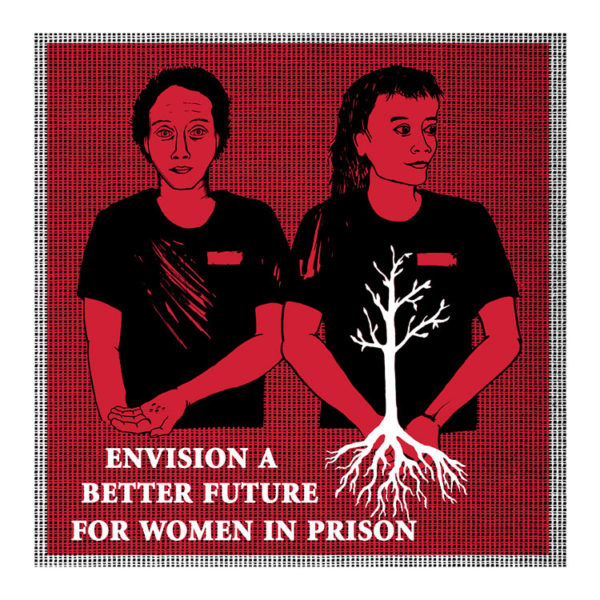

Women In Prison
Women in Prison, by Lydia Crumbley, 2009. Find it at Justseeds.


I have so much to learn. 


Monday, August 17, 2015

The Peculiar Blindness, Part 1: Introduction


Slavery Museum, Whitney Plantation, Louisiana. March 2015.


The peculiar institution
 
Before the Civil War, the South used the phrase "our peculiar institution" to refer to the system of slavery in the southern United States.


Slavery Museum, Whitney Plantation, Louisiana. March 2015.


The peculiar blindness

Ever since then, we in the United States have practiced fervently "our peculiar blindness" about our shame of  slavery, apartheid (racial segregation enforced by law), and other past and ongoing, institutional racist practices.

I call it blindness because even though we agree that, yes, slavery and Jim Crow and other injustices occurred, and those were bad things, it was largely in the past and we all just need to move on, and let's not keep talking about it.

Here's what the peculiar blindness looks like to me: 
1. Celebration of the high society and culture of the antebellum South by way of plantation tours and dress-up events, with only a nod to the human misery necessary to support that society.

2. In town squares, visitors' centers, local museums - historical recognition of the achievements, hardships, and tragedies of the white population, while virtually ignoring heroic acts for freedom and justice by people of color, massacres and atrocities visited upon people of color, sites of conscience where, for example, men, women, and children were bought and sold; or landmark legal decisions, such as the Emancipation Proclamation. 

3. Proud acclaim for populist heroes such as the pirate Jean LaFitte and Jim Bowie, without mentioning they smuggled African men, women, and children into the US to be sold as slaves after this had been outlawed (even in the South).

4. In the South, a spectacular disregard for its African-American residents by the relentless idolatry and never-ending mourning of the so-called glories of the Confederacy.

5.White folks who seem able to have "friendships" with individual people of color but who are blind to the ugliness of the assumptions and ignorance they express publicly about African-Americans as a group.

6. Memorials or museums related to the African-American experience that are, for the most part, compartmentalized as historical side bars. Arguably, this might be understood in northern states with a small African-American population, but it's difficult to justify in states where slavery was the law and where a high percentage of African-Americans are residents.   


Missouri state capitol. History museum.


In Louisiana: 

It wasn't until I'd been in Louisiana for a small while that the idea of our peculiar blindness really came home to me. It may have been when I watched the documentary,  The Cajun Way: Echoes of Acadia, at the Acadian Cultural Center in Lafayette, which is one of the six Jean Lafitte National Historical Park and Preserve sites in Louisiana.

It's a good movie and the cultural center is nice - worth a visit, for sure.

But as I watched the documentary - a well-told story of the Acadian people being forcibly removed from their homes in Canada, families separated, having to resettle in a land, climate, and culture foreign to them - the absence of a similar chronicle of note in the cultural center, describing Louisiana's settlement by African ancestors, became visible to me. In the exhibit area, there is some reference to the experience in Louisiana by people with African roots, but not much.

The town square in Opelousas has a handsome monument to the Confederacy, but no mention of other historic events of note in the town or St. Landry parish, such as the Opelousas Massacre or the Emancipation Proclamation.


Not far to the north, the visitor center in the village of Washington waxes poetic about what makes a Cajun man, and notes some important historic dates to the white population within, but silence again on the Opelousas Massacre, although it was an incident in a Washington school that lit the fatal spark to the killing that followed. Also in Washington is the national historic landmark, the Steamboat Warehouse, now a restaurant, but in the past, a location where I am told that men, women, and children were bought and sold. This is a perfect opportunity to own that part of our dark history, and make the landmark a site of conscience, but there is silence on this.


In the Missouri State Capitol there is a history museum.  


Missouri state capitol. History museum.
It wasn't until I'd been in Louisiana for awhile that I looked at how we documented our dark history in other places. My home state of Missouri, for example. A bit of the capitol's history museum looks at slavery. But, jeez, it does so in a discounting and distancing way, to wit:
  • "Missouri slaves had opportunities to learn more skills than typical slaves in the deep South."
  • "Since they could not farm in the winter, many worked part time as carpenters, hatters, cabinet makers, tailors, shoemakers, and blacksmiths. They earned money for their owners and for themselves." 
Missouri state capitol. History museum.
  • "The lives of Missouri slaves differed from those in the deep South. ... Some were encouraged to learn skills other than farming. ... "
  • "Missouri slave owners disciplined their slaves with the threat of being sold down South."
  • "Most Missouri slaves worked on small farms, where master and slave often worked side by side. The average Missouri slaveholder owned no more than four slaves."


It all sounds so ... not so bad. It sounds protective of Missouri's image at the expense of Missouri's African-American residents, past and present. And this is the official story of slavery for the state of Missouri.


Bringing sight to a dark history

When I returned to Louisiana for my second year, I stayed at an airbnb while I looked for an apartment. One of my temporary roommates was a German linguist. She expressed dismay at how we Americans hide from our dark history. 

She said that in Germany, it is required for all students, throughout their school years, to learn about the Nazi era. Every community that has a population that exceeds a certain number must have a monument that acknowledges the Holocaust. Every student, at least once in his schooling, visits a concentration camp. There are lesson plans devoted to the history, the sociology, the psychology of how the Nazis came to power, what happened, and what will keep such a thing from recurring.


But in the US, there is ... not much about American slavery and its aftermath.

Indeed, contingents of us like to say, "Get over it! That was the past! Stop stirring up trouble!"

It would be so much more comfortable to "get over it," wouldn't it? But everything I think I know about individuals, groups, and processes tell me that before we get over it, we must stop our defensive attitudes for a minute and:
  1. Acknowledge - without any qualifiers - the grotesque enormity of American slavery and its aftermath; 
  2. Express our sorrow and regret for the experience; 
  3. Listen to what the other has to say, without interrupting - and without feeling the need to agree, only to understand; and
  4. Think and act in new ways to eliminate discrimination in our midst, making it very uncomfortable for Americans to express their prejudices in speech and actions. 

In the 12-step world, such as Alcoholics Anonymous, this is called "clearing the wreckage of our past." It is not good enough to just say sorry - we also have to stop doing what was done in the past, and do things differently in the future.

Catholics have the sacrament of confession, whereby one can confess one's sins to another human being, perform an act of penance, and ultimately receive forgiveness. 

In my experience as a mediator, in cases where an injustice was done, the power of a sincere apology is huge, as is the willingness to attempt to make things right. An apology does not require groveling or humiliation. It does require humility, sincerity, and accountability. It is the authentic expression of regret that another person experienced a wrong, without any "ifs" or "buts."

How many families suffer decades-long estrangement because one or more family members refuse to acknowledge a wrong? They don't "get over it." We all know this dynamic, but seem unable to apply this knowledge in a societal context.

How many families keep certain things secret from the larger community? We don't like to "air our dirty laundry." It is our nature as humans, perhaps, to want to cover over bad things, whether it's domestic violence, incest, addictions, infidelities, or shady family businesses. The victims within the family are pulled into the little society of secrets and shame, as well. 

How many family and larger cultures of those who were victimized quash bad experiences so as to avoid renewed pain and suffering for younger generations? The younger generations never know why their parents and grandparents think and act the way they do. It is common for victims of trauma to feel shame, and that shame can reverberate through generations. If all of our children don't learn how slavery and its aftermath permeated every single aspect of some people's daily lives, from the very tiniest acts of casual contempt to the most egregious acts of violence, it is easy to fall into shame as one whose antecedents, living and dead, were victims.

We know, in theory, how important it is to shine a light on the trespasses we commit in our personal lives. If we really do want to "get over" our shared heritage of American slavery and its aftermath, then we need to bring our dark history into the fullness of light and look at it unblinkingly.


Some related resources: 

Slaveholder and slave populations by state in 1860 and in other years

Reconciliation from Beyond Intractability

What it Means to be Sorry: The Power of Apology in Mediation

Sites of Conscience

Talking circles


Slavery Museum, Whitney Plantation, Louisiana. March 2015.